










What's Happening?
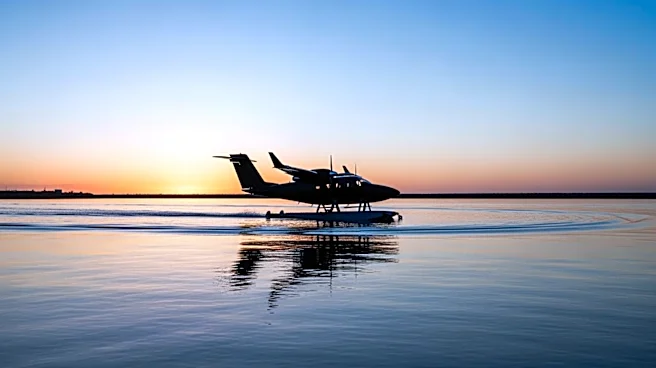
Harbour Air has introduced a new direct seaplane service connecting Victoria, Canada, and Seattle, USA. Announced on June 11, this route marks the airline's first direct connection between these two cities. The service aims to simplify travel by eliminating
the need for long drives to airports and bypassing lengthy security and immigration lines. The inaugural flight took off with a few passengers, offering a 30-minute journey that lands in the water near downtown Seattle. This new route complements Harbour Air's existing Vancouver-to-Seattle service and is expected to enhance regional economic activity by facilitating easier business and tourism exchanges. The service is part of Harbour Air's broader expansion strategy, which includes upcoming routes to Ucluelet and Campbell River. Introductory fares are available at $99 for one-way tickets booked by June 18 for travel between June 25 and September 30.
Why It's Important?
The introduction of this seaplane route is significant for both tourism and business sectors in the Victoria and Seattle regions. By providing a quick and convenient travel option, it is expected to increase the flow of visitors and business professionals between the two cities. This could lead to economic benefits such as increased tourism revenue and strengthened business ties. The route also highlights the growing demand for efficient cross-border travel solutions, particularly in regions with strong economic and cultural connections. For Victoria, Seattle represents a key market, and this service could enhance the city's appeal as a tourist destination, potentially leading to increased visitor numbers and economic growth.
What's Next?
As Harbour Air continues to expand its services, the success of this new route could lead to further developments in regional air travel. The airline's upcoming routes to Ucluelet and Campbell River suggest a strategic focus on enhancing connectivity within the region. Stakeholders such as local businesses, tourism boards, and economic development agencies are likely to monitor the impact of these services closely. If successful, this model could be replicated in other regions, potentially leading to a broader network of efficient, short-haul air travel options that cater to both business and leisure travelers.