






What's Happening?
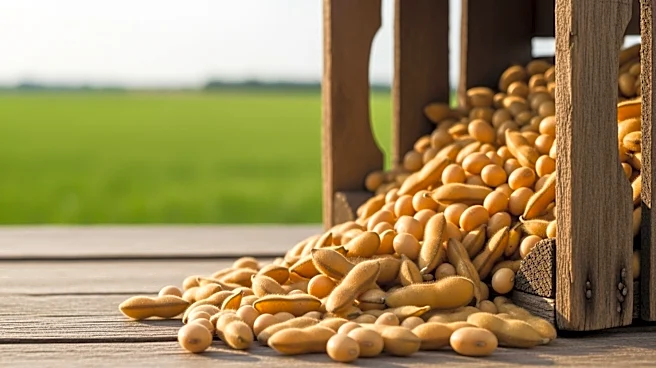
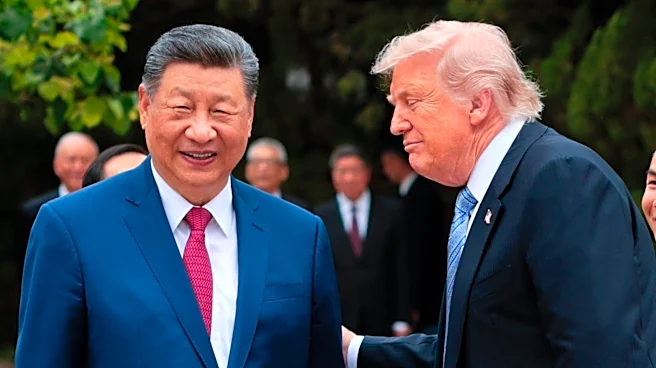
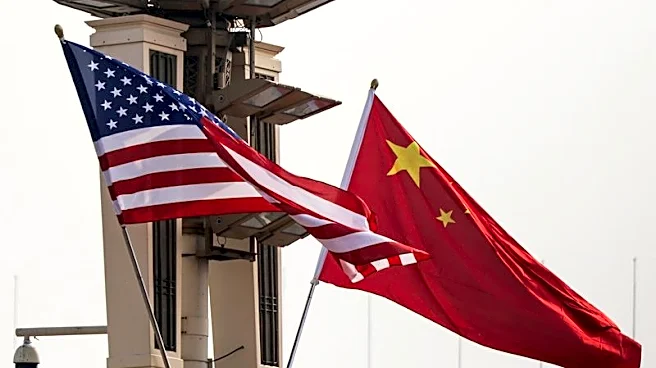
Recent trade talks between the U.S. and China have resulted in new commitments that could significantly impact U.S. agriculture. Following meetings between President Trump and Chinese President Xi Jinping, China has agreed to purchase an additional $17
billion annually in U.S. agricultural products from 2026 to 2028. This agreement also includes the reopening of beef and poultry trade, restoring access to a major global market for U.S. livestock producers. Additionally, two new bilateral boards, the Board of Trade and the Board of Investment, have been established to enhance economic relations. These boards aim to identify non-strategic goods for tariff elimination and provide recommendations on sectors for Chinese investment in the U.S. The long-term impact of these commitments will depend on their implementation and enforcement.
Why It's Important?
The new trade commitments are crucial for U.S. farmers and ranchers who have faced tight margins and market uncertainties. The agreement offers potential export opportunities, especially in a market as significant as China. With U.S. agricultural exports to China having declined in recent years, these commitments could help restore trade levels to earlier highs. The reopening of beef and poultry trade is particularly significant, as it provides immediate opportunities for U.S. livestock producers. However, the success of these commitments will largely depend on how effectively they are implemented and enforced, which has been a challenge in past agreements.
What's Next?
The next steps involve monitoring the implementation of these commitments and ensuring compliance from both sides. U.S. farmers and agricultural stakeholders will be keenly observing how these agreements are enforced and whether they lead to tangible benefits. The establishment of the bilateral boards could also lead to further economic cooperation and investment opportunities, but their effectiveness will need to be evaluated over time. Potential reactions from political leaders and industry groups will likely focus on ensuring that the commitments are met and that U.S. agricultural interests are protected.