






What's Happening?
Howard Fendrich, a renowned national sports writer for The Associated Press, has died at the age of 55. Fendrich, known for his detailed and insightful coverage of tennis and other sports, passed away at Johns Hopkins Hospital in Baltimore after being
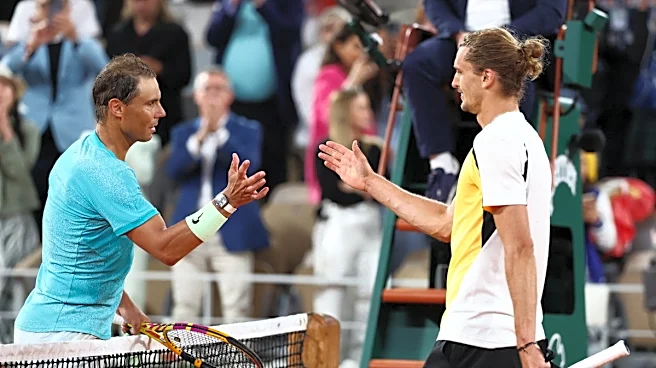
diagnosed with cancer in February. His career spanned over three decades, during which he covered numerous Grand Slam tennis finals and Olympic events. Fendrich was celebrated for his ability to bring readers into the heart of the action with his vivid storytelling. Tennis legend Roger Federer, who had numerous interactions with Fendrich, described him as a constant and reassuring presence in the tennis world. Fendrich is survived by his wife, Rosanna Maietta, his mother, brother, and two sons who are following in his footsteps in sports journalism.
Why It's Important?
Howard Fendrich's passing marks a significant loss for sports journalism, particularly in the realm of tennis coverage. His work not only informed but also enriched the understanding of sports for countless readers. Fendrich's ability to capture the essence of high-stakes matches and the personalities involved made him a respected figure among athletes and colleagues alike. His contributions helped shape the narrative of tennis over the past two decades, chronicling the careers of iconic players like Roger Federer, Serena Williams, and Rafael Nadal. The void left by his passing will be felt across the sports journalism community, as his unique voice and perspective were instrumental in bringing the intricacies of the sport to a global audience.
What's Next?
In the wake of Howard Fendrich's death, the Associated Press and the broader sports journalism community will likely reflect on his contributions and the impact of his work. There may be tributes and memorials to honor his legacy, celebrating his dedication to the craft and his influence on sports reporting. His family, including his sons who are pursuing careers in sports journalism, may continue to uphold his legacy by contributing to the field with the same passion and integrity that Fendrich exemplified. The AP may also consider how to fill the gap left by Fendrich's absence, potentially inspiring a new generation of journalists to follow in his footsteps.