

What's Happening?
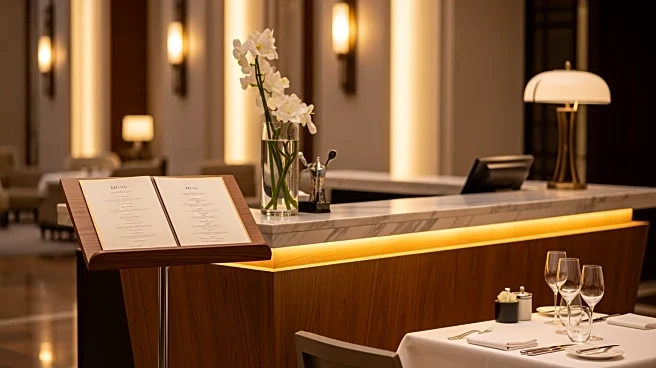
Several restaurant brands are expanding into the hotel industry, leveraging their strong identities and customer bases to create lifestyle-driven hospitality offerings. This trend reflects a broader shift in hospitality towards experiential travel, where
guests prioritize unique and memorable stays. Notable examples include Nobu Hospitality and Cipriani, which have successfully integrated their dining experiences into luxury hotels. The expansion aligns with growing traveler preferences for immersive experiences that combine dining, culture, and local identity. Industry analysts note that this trend is particularly evident in urban destinations, where lifestyle hotels compete for guests seeking design-forward properties and social environments.
Why It's Important?
The convergence of restaurant and hotel concepts represents a significant transformation in the hospitality industry. By integrating food and beverage as core drivers of hotel identity, these hybrid concepts can create multiple revenue streams and enhance brand differentiation in competitive markets. For restaurant operators, entering the hotel sector provides an opportunity to extend their brand into new revenue streams while strengthening their market presence. For hotel developers, partnerships with established restaurant brands offer a way to attract both travelers and local customers. This trend underscores the growing importance of brand identity and guest experience in hospitality, as lifestyle and boutique concepts continue to gain traction globally.
What's Next?
As experience-driven travel becomes more prominent, restaurant-led hotel concepts may play an increasingly important role in shaping the future of lifestyle hospitality. Industry observers expect the convergence of restaurant and hotel concepts to continue, as hospitality companies seek new ways to differentiate their offerings and capture evolving traveler demand. Developers must ensure that food and beverage concepts align with the hotel’s positioning and target audience, while maintaining consistent service standards. The success of these projects will depend on location, design, and the ability to create a cohesive brand experience that resonates with guests.