





What's Happening?
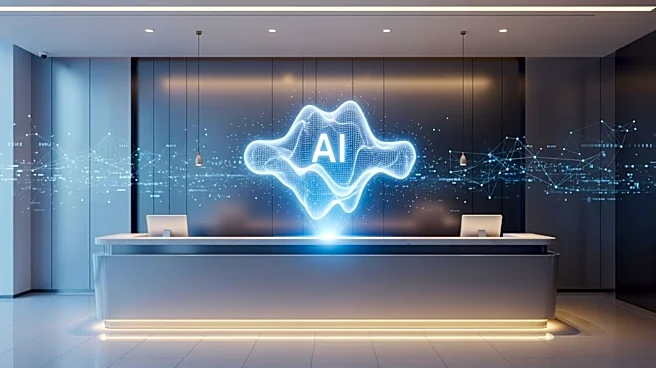
The hospitality industry is experiencing a structural transformation due to artificial intelligence (AI), evolving guest expectations, and economic pressures. The concept of the Selective [Human Service] Hotel is introduced, where human interaction is concentrated
in high-value moments while AI manages routine tasks. This model challenges the assumption that more human interaction leads to better service. AI's role in hospitality includes automating repetitive tasks, predicting guest needs, orchestrating workflows, and reducing routine guest-staff interactions. Contemporary guests favor frictionless experiences, immediate access to information, and personalized but unobtrusive service, leading to a shift in guest expectations where outcomes are valued over interaction.
Why It's Important?
AI's integration into hospitality is crucial for optimizing service delivery and enhancing guest experiences. By concentrating human interaction in high-value moments, hotels can improve service quality and operational efficiency. This approach addresses rising labor costs, workforce shortages, and increased competition, making it a sustainable model for the future. AI's ability to automate routine tasks allows staff to focus on creating memorable experiences and resolving complex issues, enhancing guest satisfaction and loyalty. The shift towards AI-driven hospitality represents a fundamental change in how service quality is perceived and delivered, offering a competitive advantage to hotels that embrace this model.
What's Next?
The hospitality industry will need to redefine roles and skillsets to align with the Selective Human Value Model. Emerging roles such as Guest Experience Curator and Service Recovery Specialist will focus on personalization and high-impact issue resolution. Educational institutions must adapt their training programs to emphasize cognitive and emotional capabilities, preparing the workforce for AI collaboration and data-informed decision-making. Hotels will need to balance efficiency with experiential value to avoid over-automation and maintain brand differentiation. The industry faces strategic risks related to over-automation and under-automation, requiring careful management to achieve optimal balance.
Beyond the Headlines
AI's integration into hospitality raises questions about the balance between technology and human interaction. While AI can enhance efficiency and personalization, it challenges traditional notions of service quality, which have historically relied on human presence. The industry must navigate these changes carefully to ensure that AI enhances rather than diminishes the human touch in hospitality. Additionally, AI's role in sustainability efforts highlights the potential for technology to drive meaningful change in environmental practices, offering a model for other industries to follow.