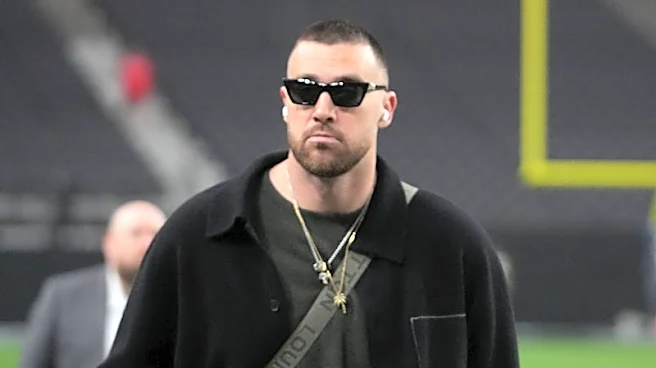









What's Happening?
Argentine police have apprehended two Chilean citizens suspected of being part of a transnational crime gang that targeted the homes of prominent athletes, including stars from the NBA and NFL. The arrests occurred at the Retiro bus station in Buenos
Aires, as confirmed by the Argentine Federal Police. The suspects are believed to be involved in a series of burglaries that affected the residences of NFL stars Patrick Mahomes and Travis Kelce, as well as NBA players Luka Doncic and Mike Conley Jr. The crime ring reportedly used advanced technology to bypass security systems and track athletes' movements through social media. The FBI has been involved in the investigation, highlighting the use of publicly available information by these organized crime groups to execute their plans. The suspects are currently in custody, awaiting extradition proceedings requested by the United States.
Why It's Important?
This development underscores the vulnerabilities faced by high-profile athletes due to their public visibility and the sophisticated methods employed by organized crime groups. The targeting of athletes like Patrick Mahomes and Travis Kelce not only raises concerns about personal security but also highlights the broader issue of privacy in the digital age. The use of social media and other publicly available information by criminals to track and exploit individuals' habits is a growing concern. This case also emphasizes the need for enhanced security measures and awareness among public figures to protect their personal lives and assets. The involvement of international law enforcement agencies like the FBI and Argentine police illustrates the global nature of such criminal activities and the necessity for cross-border cooperation in tackling them.
What's Next?
The arrested individuals are awaiting extradition to the United States, where they may face charges related to the burglaries. The legal proceedings could lead to further revelations about the extent of the crime ring's operations and potentially more arrests. The case may prompt sports organizations and athletes to reassess their security protocols and consider additional measures to safeguard against similar threats. Additionally, there may be increased advocacy for stricter regulations on the sharing of personal information online to prevent such crimes. The outcome of this case could set a precedent for how international crime involving high-profile targets is addressed in the future.