





What's Happening?
The ongoing conflict involving the US, Israel, and Iran has led to a significant disruption in global oil supplies, impacting the aviation industry. The closure of the Strait of Hormuz has caused jet fuel prices to surge from $99 to $209 per barrel, prompting
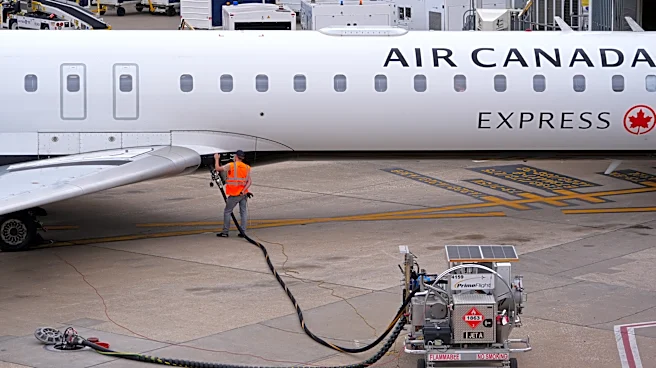
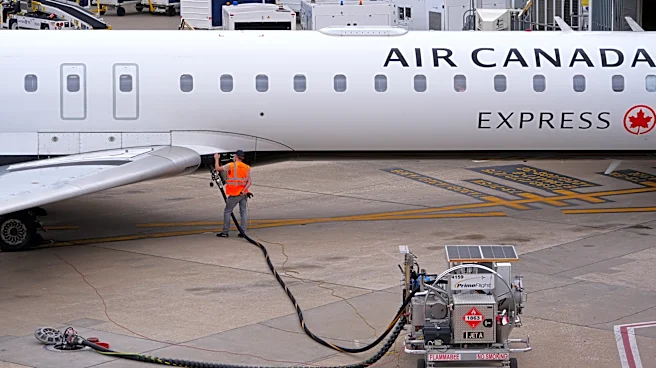
airlines to reduce flights and increase ticket prices. Air Canada announced the suspension of its service to New York's JFK Airport from June 1 to October 25 to manage fuel costs. Other airlines, including United, Delta, Air France-KLM, and Cathay Pacific, have also reduced routes and raised prices. The International Energy Agency has warned that European countries may face jet fuel shortages, further affecting flight availability.
Why It's Important?
This development highlights the aviation industry's vulnerability to geopolitical events, with significant implications for travelers and the global economy. The increased cost of air travel could deter tourism and business travel, affecting related industries such as hospitality and retail. Airlines are likely to focus on profitability over volume, potentially leading to a long-term shift in pricing strategies. The crisis may accelerate the adoption of sustainable aviation fuels and alternative technologies as airlines seek to mitigate future risks. Consumers face higher travel costs and reduced flexibility, impacting their travel plans and budgets.
What's Next?
Airlines are expected to maintain elevated prices until the geopolitical situation stabilizes and oil supplies normalize. Travelers are advised to book flights early to avoid further price hikes and consider flexible ticket options. The industry may see increased investment in sustainable fuel technologies as a long-term solution to fuel dependency. Stakeholders, including governments and environmental groups, may push for policies supporting alternative energy sources in aviation. The situation remains fluid, with potential for further disruptions if the conflict escalates or if diplomatic resolutions are delayed.
Beyond the Headlines
The current crisis underscores the need for the aviation industry to diversify its energy sources and reduce reliance on volatile geopolitical regions. This could lead to increased research and development in sustainable aviation technologies, potentially transforming the industry. The situation also raises ethical questions about the environmental impact of air travel and the responsibility of airlines to adopt greener practices. Long-term, the industry may face regulatory changes aimed at reducing carbon emissions and promoting energy independence.