

What's Happening?
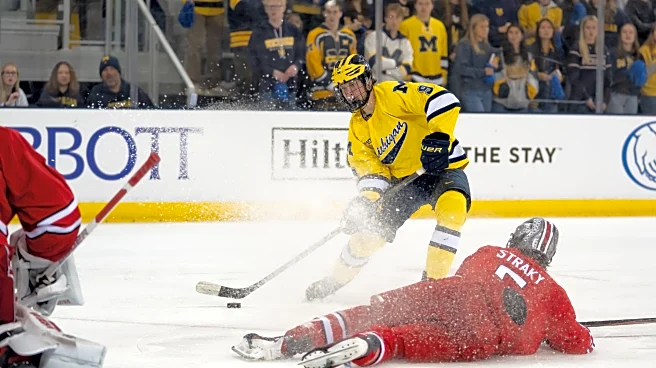
The introduction of Name, Image, and Likeness (NIL) agreements and revenue sharing is significantly impacting college hockey. Penn State, for instance, has made a substantial investment in its hockey program, highlighted by the recruitment of Gavin McKenna,
a top prospect from Canada's Western Hockey League. This move is part of a broader trend where colleges are leveraging NIL to attract top talent. The NCAA's recent decision to allow Canadian Hockey League players to be eligible for college hockey has further intensified competition among schools.
Why It's Important?
The shift towards NIL and revenue sharing in college hockey represents a major change in how programs attract and retain talent. Schools with larger budgets and resources, like those in the Big Ten, are better positioned to capitalize on these changes, potentially widening the gap between them and smaller programs. However, this also presents opportunities for smaller schools to innovate and find unique ways to compete. The ability to offer competitive NIL packages could become a decisive factor in recruiting top players, influencing the future landscape of college hockey.
What's Next?
As the NCAA hockey tournament approaches, the impact of NIL and revenue sharing will be closely observed. Schools will continue to adapt their strategies to remain competitive, with some potentially increasing their financial commitments to attract top talent. The success of programs like Penn State in leveraging NIL could inspire other schools to follow suit. Additionally, the ongoing evolution of NIL regulations and their implementation will likely shape the future of college hockey, affecting recruitment, team dynamics, and overall competitiveness.