



What's Happening?
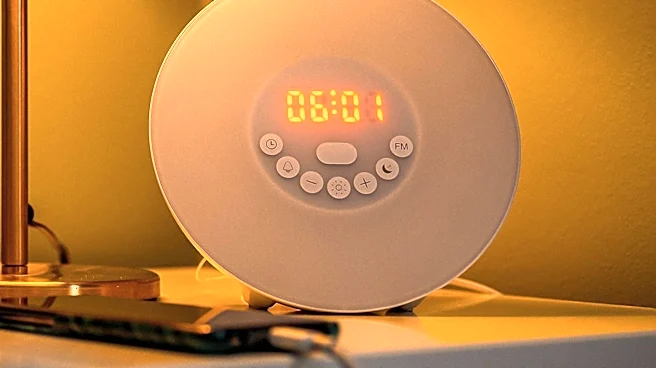
The Dreamie alarm clock is gaining attention for its ability to help users reduce smartphone dependency at bedtime. Unlike traditional alarm clocks, Dreamie can play podcasts, offering a unique feature that appeals to those who struggle with phone addiction.
The device operates in various modes, including a 'wind down' mode that mimics a fireplace with soft lighting and a 'noise mask' mode that plays soothing sounds like thunderstorms. Its 'back to sleep' mode allows users to listen to pre-selected podcasts or nature sounds if they wake up during the night, minimizing the need to reach for a smartphone. Dreamie supports Bluetooth headphones, ensuring that users can enjoy these features without disturbing others. The device connects to Wi-Fi, enabling it to download podcasts via RSS feeds, a technology that remains open and accessible despite the trend towards closed systems by major platforms.
Why It's Important?
The Dreamie alarm clock addresses a growing concern about the impact of smartphone use on sleep quality and overall health. By providing an alternative to using phones in bed, Dreamie could help improve sleep hygiene and reduce the negative effects associated with screen time before sleep. This innovation is particularly relevant as studies show a significant portion of the population keeps their phones in the bedroom, often leading to disrupted sleep patterns. The device's reliance on RSS technology also highlights the ongoing debate about open versus closed internet systems, with Dreamie standing as a proponent of open access to content. This could influence future developments in tech products aimed at improving lifestyle and health.
What's Next?
As Dreamie gains popularity, it may inspire other tech companies to develop similar products that promote healthier sleep habits. The success of Dreamie could lead to further innovations in the realm of sleep technology, potentially integrating more personalized features or expanding content options. Additionally, the device's use of RSS feeds might encourage other developers to explore open-source solutions, challenging the dominance of closed platforms. Consumer feedback and market demand will likely shape the evolution of such devices, possibly leading to more affordable options or enhanced functionalities.