



What's Happening?
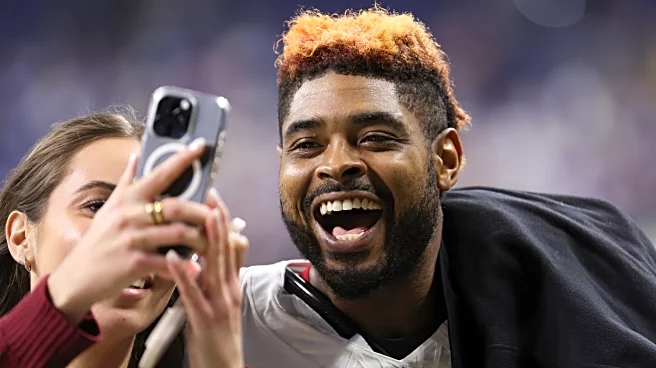
Boston Celtics star guard Jaylen Brown has expressed his dissatisfaction with the media's portrayal of athletes, stating that he believes the media often fails to provide a complete and accurate narrative. During an appearance on the White Noise Podcast, Brown discussed his decision to engage in live streaming as a means to control his own story. He criticized the media for being 'very lazy' and suggested that controversy is often prioritized over factual reporting to drive engagement. Brown highlighted that social media has exacerbated this issue by encouraging rapid consumption of headlines without deeper investigation into the stories. He emphasized that this trend leads to a skewed public perception, as people often form opinions based solely
on headlines rather than the full context.
Why It's Important?
Jaylen Brown's comments underscore a growing concern among public figures about the role of media in shaping public perception. His critique highlights the tension between traditional journalism and the evolving landscape of digital media, where speed and sensationalism can overshadow accuracy and depth. This issue is significant as it affects how athletes and other public figures are perceived by the public, potentially impacting their careers and personal lives. Brown's approach to using live streaming as a tool for narrative control reflects a broader trend of individuals leveraging digital platforms to bypass traditional media channels. This shift could influence how media organizations approach reporting and how audiences consume news, with potential implications for media credibility and public trust.
What's Next?
As more athletes and public figures turn to personal platforms to share their stories, media organizations may need to adapt by focusing on more comprehensive and balanced reporting. This could involve greater emphasis on context and depth in news coverage to maintain credibility and audience trust. Additionally, the rise of personal broadcasting through social media may prompt discussions about the responsibilities of public figures in shaping narratives and the potential impact on media ethics. Stakeholders in the media industry might explore new strategies to engage audiences while maintaining journalistic integrity.