


What's Happening?
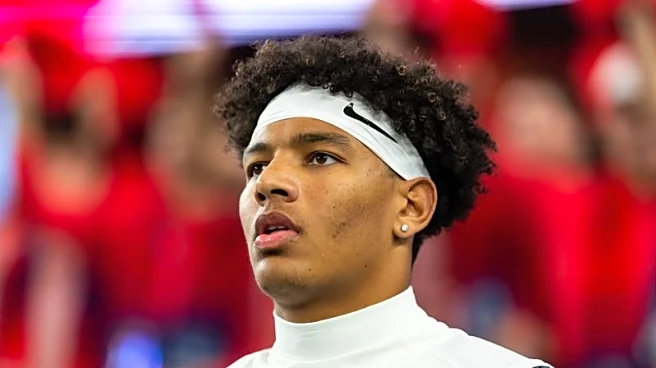
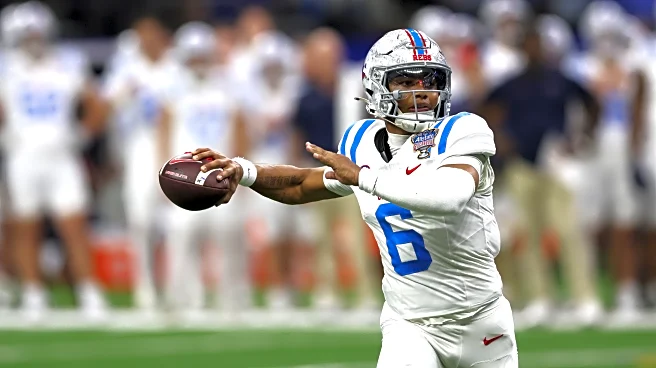
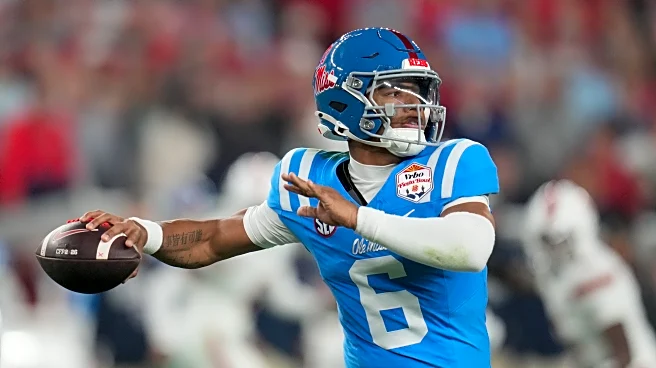
Ole Miss quarterback Trinidad Chambliss is currently involved in a legal battle with the NCAA to secure an additional season of eligibility. Chambliss, who previously played at Division II Ferris State, did not receive a redshirt season due to serious health issues that prevented him from participating in games. Despite these circumstances, the NCAA denied his appeal for a waiver, prompting Chambliss and his legal team to pursue further action. The case is set to be heard in the State of Mississippi, with a court hearing scheduled for February 12. Chambliss's attorney, Tom Mars, is optimistic about winning the case, which would allow Chambliss to play for Ole Miss in 2026.
Why It's Important?
The outcome of this legal battle could have significant implications for
NCAA eligibility rules and the rights of student-athletes facing health challenges. If Chambliss is granted an additional year of eligibility, it may set a precedent for other athletes in similar situations, potentially leading to changes in how the NCAA evaluates medical waivers. This case also highlights the ongoing tension between student-athletes and the NCAA regarding eligibility and fairness, particularly in cases involving health-related absences. A favorable ruling for Chambliss could empower other athletes to challenge NCAA decisions that they perceive as unjust.
What's Next?
The next step in this legal process is the court hearing on February 12, where Chambliss's legal team will seek a permanent injunction to allow him to play in 2026. The decision from this hearing will be crucial, as it will determine whether Chambliss can continue his college football career. The case is likely to attract attention from other student-athletes, legal experts, and NCAA officials, as it could influence future eligibility disputes. Depending on the outcome, the NCAA may face increased pressure to revisit its policies on medical waivers and eligibility criteria.