




What's Happening?
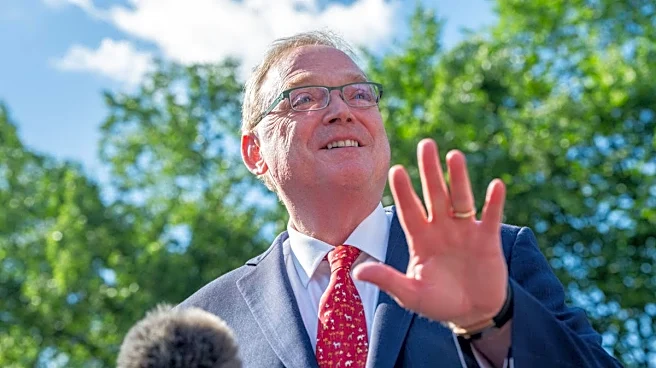
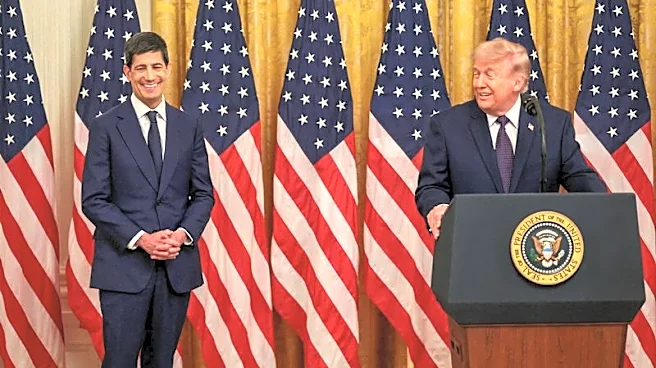
President Donald Trump has expressed his disapproval of a potential interest rate hike by the Federal Reserve, as his nominee Kevin Warsh prepares to chair his first policy meeting. This comes in the wake of a robust U.S. jobs report for May, which has led
to market speculation that the Fed might increase rates to control inflation. Trump, in an interview with NBC's Meet the Press, argued against raising rates, suggesting that the current economic strength should not be penalized with higher borrowing costs. He emphasized the need to lower interest rates instead. The U.S. employment report showed a significant increase in nonfarm payrolls, reinforcing expectations of a rate hike by the end of the year. Despite nominating Warsh to lead the Fed, Trump has stated that he wants Warsh to act independently, though he expressed some frustration over the potential rate increase.
Why It's Important?
The debate over interest rate adjustments is crucial as it impacts the broader U.S. economy, influencing borrowing costs for consumers and businesses. A rate hike could slow economic growth by making loans more expensive, potentially affecting sectors like housing and consumer spending. Conversely, keeping rates low could fuel inflation if the economy overheats. President Trump's stance highlights the tension between political leadership and central bank independence. His comments may influence public perception and market expectations, adding pressure on the Fed's decision-making process. The outcome of this debate will have significant implications for economic policy and financial markets, affecting everything from stock prices to the cost of mortgages.
What's Next?
Kevin Warsh's upcoming chairmanship of the Federal Open Market Committee meeting on June 16-17 will be closely watched. The Fed's decision on interest rates will be pivotal, with potential reactions from various stakeholders, including political leaders, financial markets, and the business community. If the Fed decides to raise rates, it could lead to a recalibration of market strategies and economic forecasts. Conversely, maintaining or lowering rates might spur further economic activity but could also raise concerns about inflation. The Fed's approach will be critical in balancing economic growth with inflationary pressures.