
What's Happening?
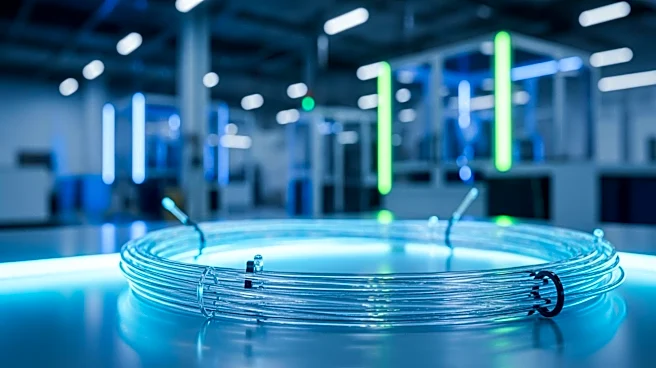
Corning is planning to construct three new factories to produce optical fiber products for Nvidia, as the demand for optical fiber surges due to the expansion of AI data centers. Nvidia aims to replace
copper cables with Corning's optical fiber in its AI rack-scale systems to enhance energy efficiency and reduce latency. This shift is part of a broader trend where AI data centers require significantly more optical fiber than traditional cloud computing centers. The demand for optical fiber is expected to rise sharply, with data centers projected to account for 30% of global optical fiber demand by 2027, up from less than 5% in 2024. This increase is driven by the need for high-speed connections between large numbers of servers in AI data centers.
Why It's Important?
The growing demand for optical fiber in AI data centers highlights a significant shift in investment strategies and industrial priorities. As AI technologies advance, the infrastructure supporting them must also evolve, leading to increased capital allocation in sectors like optical fiber. This trend is influencing major U.S. technology companies, such as Meta and Nvidia, to secure long-term supply agreements to ensure they meet their future needs. The expansion of optical fiber production is crucial for maintaining the pace of technological advancement and supporting the energy efficiency goals of data centers. This development also reflects a broader economic impact, as the optical fiber market is projected to grow significantly, indicating robust investment opportunities and potential job creation in the sector.
What's Next?
As the demand for optical fiber continues to grow, companies like Corning are likely to expand their production capabilities further. However, the industry faces challenges, particularly in the production of optical fiber preforms, which require advanced technology and time to scale up. This bottleneck could limit the speed at which the industry can meet the rising demand. In response, technology companies may continue to secure long-term supply agreements to mitigate potential shortages. Additionally, investors are expected to increase their focus on the optical fiber sector, potentially leading to more innovation and investment in related technologies.
Beyond the Headlines
The shift towards optical fiber in AI data centers not only impacts the technology and investment sectors but also has broader implications for energy consumption and environmental sustainability. By replacing copper cables with optical fiber, data centers can significantly reduce their energy usage, contributing to lower carbon emissions. This aligns with global efforts to combat climate change and promote sustainable practices in technology development. Furthermore, the increased demand for optical fiber could drive advancements in production technologies, potentially leading to more efficient and cost-effective manufacturing processes.