


What's Happening?
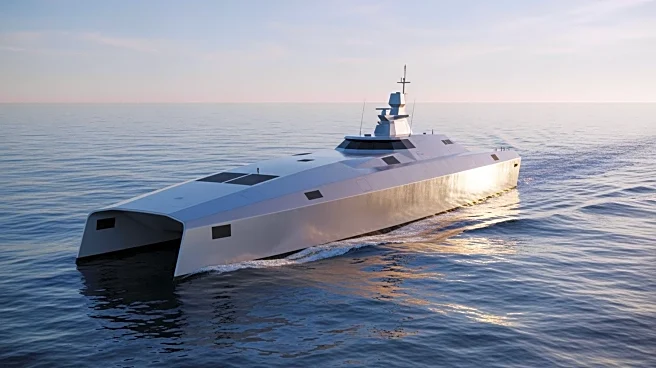
Manufacturers of drone vessels are gearing up for testing opportunities with the U.S. Navy, focusing on the integration of unmanned systems into naval operations. Blue Water Autonomy's CEO, Rylan Hamilton, highlighted the ongoing testing of the Liberty Class, a nearly 200-foot autonomous surface vessel. The vessel has completed over a thousand hours of sea trials, with production set to begin later this year. The Chief of Naval Operations (CNO) emphasized the need for integrating robotic and autonomous systems into military assets, while the Pentagon has restructured its arms export mechanisms to enhance defense sales.
Why It's Important?
The development and testing of autonomous maritime technology represent a significant shift in naval operations, potentially
enhancing the U.S. Navy's capabilities. This move could lead to more efficient and cost-effective operations, reducing the need for human presence in dangerous environments. The restructuring of arms export mechanisms aims to streamline defense sales, potentially boosting the U.S. defense industry and strengthening alliances through increased military cooperation. These advancements could have long-term implications for military strategy and international relations.
What's Next?
The U.S. Navy will continue testing autonomous systems, with a focus on integrating these technologies into standard operational models. The Pentagon's reorganization of arms export processes may lead to increased foreign investment and job creation. Future developments will likely include further exploration of command and control frameworks for unmanned systems, as well as continued evaluation of defense contractors' performance.