






What's Happening?
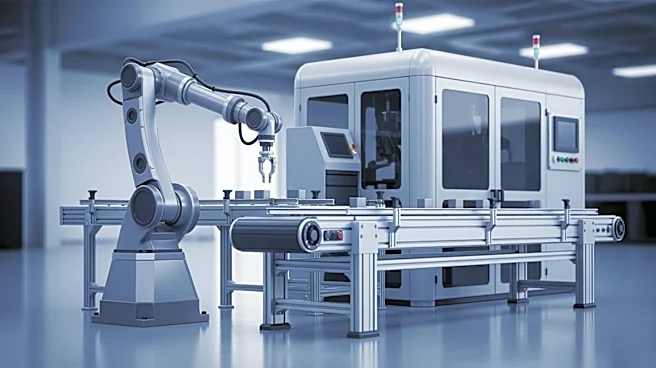
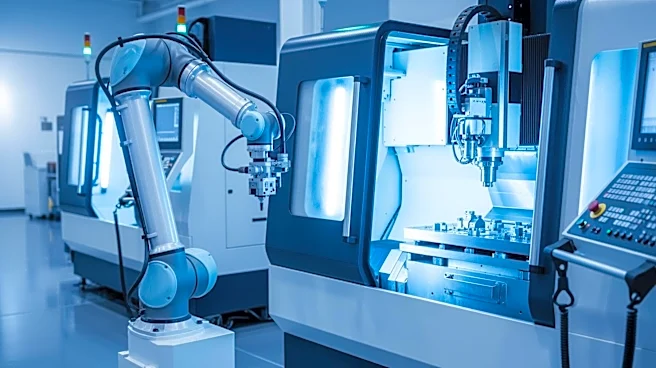
The integration of robot cells and machine tending solutions is transforming manufacturing by enhancing efficiency and adaptability in production lines. These technologies are increasingly adopted across industries to automate repetitive tasks such as machine loading,
material handling, and assembly. By reducing manual intervention, they improve throughput and consistency while allowing factories to quickly adapt to changing production requirements. Modern robot cells are equipped with advanced sensors and AI capabilities, enabling them to handle complex tasks with minimal supervision. This evolution from simple operations to sophisticated material handling demonstrates significant advancements in robotics technology.
Why It's Important?
The adoption of robot cells and machine tending solutions addresses longstanding challenges in manufacturing, such as bottlenecks in loading and unloading operations. By automating these processes, manufacturers can maintain competitiveness and meet rising demands for throughput, quality, and flexibility. This shift towards strategic automation is crucial for industries facing labor shortages and the need for increased productivity. The integration of robotics and automation not only enhances operational efficiency but also supports continuous improvement in product quality, positioning manufacturers to better respond to market changes and consumer demands.
What's Next?
As manufacturers continue to integrate robot cells and machine tending solutions, the focus will be on seamless integration within existing production systems. This includes ensuring that automation modules interface effectively with other equipment to maintain smooth production flows. The ongoing development of robotics technology, including sensor-based automation and monitoring software, will further enhance manufacturing capabilities. The workforce will also undergo transformation, with roles shifting towards process supervision and preventive maintenance. Looking ahead, flexible automation platforms will become central to production strategies, enabling rapid adaptation to market changes and reinforcing competitive advantages.