







What's Happening?
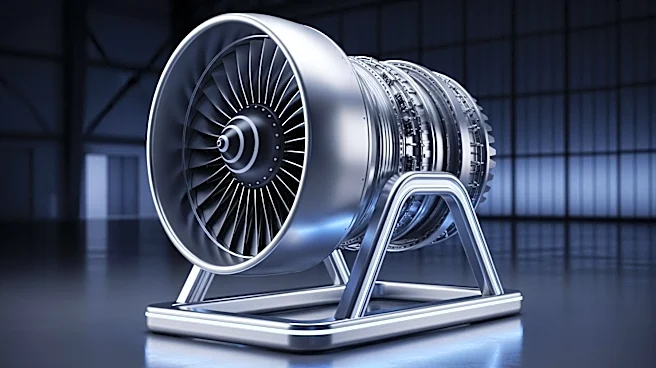
Beehive Industries, a propulsion start-up based in Colorado, has introduced a new 1,000lb-thrust turbofan engine named Rampart, designed for uncrewed fighter aircraft. This development marks a significant expansion for Beehive, which previously focused
on smaller turbojets for drones and missiles. The Rampart engine is tailored for Collaborative Combat Aircraft (CCA), which are envisioned to support frontline tactical fighters like the Lockheed Martin F-35A and F-22 by providing weapons and sensor support. The engine is designed to offer high endurance and reliability for diverse mission profiles. The U.S. Air Force, U.S. Marine Corps, and Royal Australian Air Force are actively involved in CCA development, with other services like the U.S. Navy and UK Royal Air Force in earlier stages. The CCA program emphasizes affordability and high-rate production, necessitating simpler and cheaper engines compared to conventional fighters.
Why It's Important?
The introduction of the Rampart engine by Beehive Industries is a significant development in the defense sector, particularly in the realm of uncrewed aerial vehicles (UAVs). As military forces globally are increasingly investing in uncrewed systems, the demand for efficient and cost-effective propulsion solutions is rising. The Rampart engine's design aligns with the strategic needs of modern air forces, which require UAVs capable of supporting manned aircraft in complex combat scenarios. This development could enhance the operational capabilities of the U.S. and allied forces, providing them with advanced tools to maintain air superiority. Additionally, the focus on affordability and high-rate production could lead to broader adoption of such technologies, potentially reshaping military procurement and operational strategies.
What's Next?
Beehive Industries is preparing to commence flight testing of its Rampart engine, which will be a critical step in validating its performance and reliability. The success of these tests could lead to further contracts and integration into military fleets. Meanwhile, other engine suppliers like Honeywell, GE Aerospace, and Kratos are also developing engines for the CCA program, indicating a competitive landscape. The outcome of these developments will likely influence future military strategies and procurement decisions, as armed forces seek to balance cost, performance, and technological advancement in their UAV fleets.