






What's Happening?
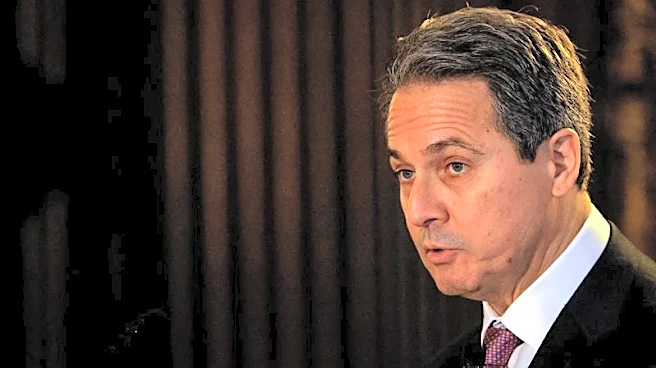
Federal Reserve Governor Christopher Waller has expressed concerns over the current economic conditions, citing the ongoing Iran conflict and a stagnant labor market as complicating factors for interest rate decisions. In a recent speech, Waller emphasized
the challenges posed by high inflation and a labor market that shows no job growth, yet appears stable. He indicated that the Fed might need to maintain its current policy rate until the economic outlook becomes clearer. Waller's remarks reflect a cautious approach, balancing the risks of inflation against those of the labor market, and suggest that the Fed could remain on hold for an extended period.
Why It's Important?
Waller's comments underscore the complexity of the Fed's dual mandate to manage inflation and employment. The Iran conflict has introduced additional uncertainty, potentially affecting global oil supplies and inflation rates. The labor market's lack of growth, despite stability, poses a dilemma for policymakers who must decide whether to prioritize inflation control or support for employment. The Fed's decision to hold rates could have significant implications for economic growth, consumer spending, and business investment. Stakeholders across various sectors will be closely watching the Fed's actions, as they could influence economic recovery and stability.
What's Next?
The Fed's future policy decisions will likely depend on developments in the Iran conflict and changes in the labor market. As the situation evolves, the Fed may need to adjust its approach to interest rates to address emerging economic challenges. Market participants will be looking for signals from the Fed regarding its policy direction, as any shifts could impact financial markets and economic forecasts. The balance between inflation and employment will remain a key focus for the Fed as it navigates these uncertain times.