



What's Happening?
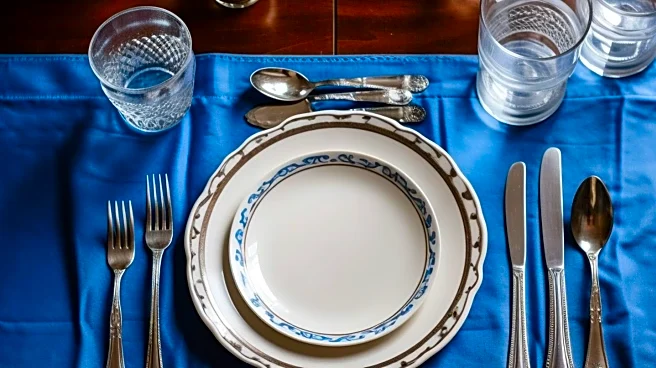
The Pesach Seder, a central ritual in Jewish tradition, often becomes a stage for generational and ideological differences within families. The Haggadah, which guides the Seder, anticipates these differences, particularly through the story of the Four
Sons. The narrative addresses the challenge of maintaining a collective identity while accommodating diverse perspectives. The 'wicked' son, who questions the ritual's relevance, symbolizes the tension between tradition and modernity. The Haggadah's approach is not to exclude but to engage, emphasizing the importance of dialogue and inclusion in preserving cultural continuity.
Why It's Important?
The Pesach Seder's handling of generational differences is a microcosm of broader societal challenges in maintaining cultural and familial bonds amidst changing values. The emphasis on dialogue and inclusion reflects a strategy for addressing ideological divides, which is increasingly relevant in today's polarized world. For Jewish families, the Seder is a critical moment for transmitting values and fostering a sense of belonging, which is essential for cultural preservation. The Haggadah's approach offers a model for other communities facing similar challenges.
Beyond the Headlines
The Seder's emphasis on inclusion over agreement highlights a broader cultural shift towards valuing diverse perspectives within a shared tradition. This approach challenges the notion that cultural continuity requires uniformity, suggesting instead that it thrives on dialogue and engagement. The Haggadah's wisdom in keeping all voices at the table, even those that question, underscores the importance of relational dynamics in cultural transmission. This perspective is particularly relevant in an era where identity and belonging are increasingly contested.