







What's Happening?
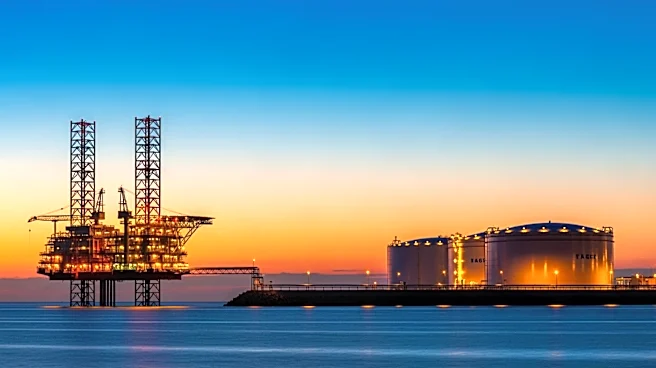
Senegal is advancing towards full ownership of the Yakaar-Teranga gas field, a major energy asset projected to cost $7.5 billion. The project, identified by Kosmos Energy, an American upstream oil company, is expected to significantly reduce Senegal's
reliance on imported fuels and alleviate its fiscal burden from energy subsidies, which exceed $1 billion annually. The development is planned in phases, with the first stage costing $2.5 billion to supply 300 million cubic feet of gas per day domestically. A second phase, valued at $5 billion, will focus on downstream industrial growth. The project aligns with Senegal's broader strategy to enhance energy security and foster industrial expansion in sectors like fertilizer, petrochemicals, steel, and cement. Kosmos Energy's contract is set to expire in July, potentially leaving PETROSEN, Senegal's national oil company, as the sole operator.
Why It's Important?
The Yakaar-Teranga project is pivotal for Senegal's economic and energy future. By reducing dependency on imported fuels, the project could stabilize energy costs and improve energy security. The industrial expansion facilitated by the project is expected to drive economic growth and create jobs, particularly in energy-intensive industries. This move reflects a broader trend in Africa, where countries are seeking greater control over their natural resources to boost economic development. The project's success could position Senegal as a significant player in the global energy market, attracting further investment and enhancing its geopolitical influence.
What's Next?
As Kosmos Energy's contract nears expiration, PETROSEN is poised to assume full control of the Yakaar-Teranga field. This transition will require strategic planning to ensure the project's continued development and success. The Senegalese government will likely focus on securing long-term offtake agreements to support project financing and attract investment. Additionally, the government may need to address potential challenges related to infrastructure development and regulatory frameworks to facilitate the project's progress. Stakeholders, including international investors and local communities, will be closely monitoring these developments.