
What's Happening?
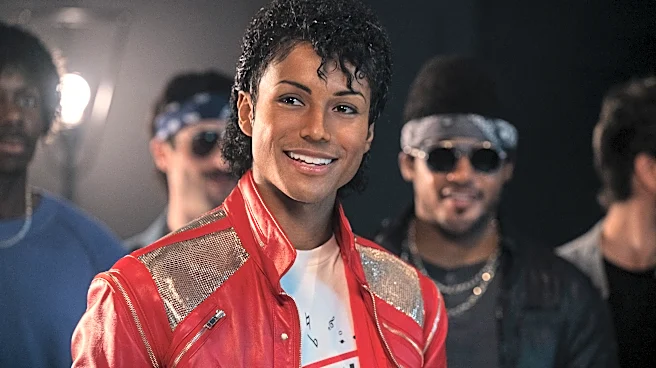
Antoine Fuqua's biopic 'Michael' focuses on the early career of Michael Jackson, covering his rise to fame from his boyhood in Gary, Indiana, to the late-1980s 'Bad' tour. The film intentionally avoids
addressing the allegations of sexual abuse that surfaced after 1988, instead celebrating Jackson's musical achievements and his impact on breaking racial barriers in the music industry. The film features Jaafar Jackson, Michael's nephew, in the lead role, and is produced by six Jackson family members, raising questions about its objectivity.
Why It's Important?
The release of 'Michael' highlights the ongoing challenge of portraying complex and controversial figures in biographical films. By focusing on Jackson's early career and avoiding the more controversial aspects of his life, the film may appeal to fans who wish to celebrate his musical legacy. However, it also raises ethical questions about the responsibility of filmmakers to address the full scope of a subject's life, particularly when allegations of abuse are involved. The film's approach reflects broader debates in the entertainment industry about how to balance artistic expression with sensitivity to real-world issues.
Beyond the Headlines
The decision to exclude the allegations from the film may impact its reception among audiences and critics, potentially leading to discussions about the role of biopics in shaping public perception of historical figures. The involvement of Jackson's family in the production could be seen as an attempt to control the narrative, which may influence how the film is perceived in terms of authenticity and bias. This case underscores the complexities of storytelling in biographical films, where artistic choices can have significant cultural and ethical implications.