


What's Happening?
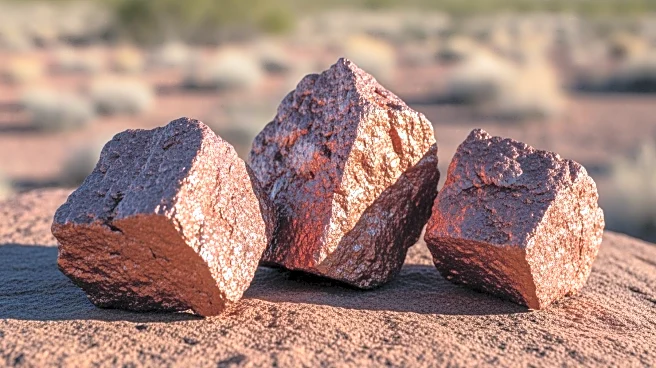
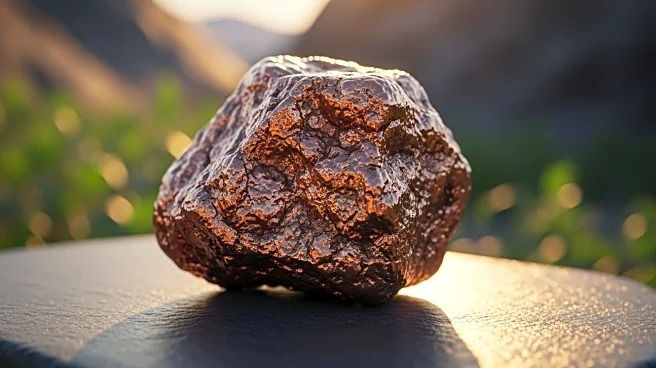
Lodestar Minerals has announced the confirmation of xenotime as the dominant mineral at its Virgin Mountain Rare Earth Element Project in Arizona. This discovery was made following a mineralogy study on rock chip samples, which revealed significant heavy
rare earth element (HREE) potential. Xenotime is notable for being one of the few HREE-dominant minerals with a proven commercial processing pathway. The mineralogical samples from the site showed varying concentrations of total rare earth oxide (TREO), with a substantial portion being heavy rare earth oxide (HREO). The samples were collected from a mineralized shear zone within a mapped structure. Executive Director Coraline Blaud expressed optimism about the findings, highlighting the project's potential value and strategic relevance to the U.S. domestic supply priorities.
Why It's Important?
The confirmation of xenotime at Virgin Mountain is significant for the U.S. rare earth element industry, which is crucial for various high-tech and defense applications. The presence of xenotime, a mineral with a proven processing pathway, enhances the project's viability as a source of heavy rare earth elements like dysprosium, terbium, and lutetium. These elements are in high demand due to their applications in electronics, renewable energy technologies, and military equipment. The development of domestic sources of these materials is strategically important for reducing U.S. reliance on foreign imports, particularly from China, which currently dominates the global rare earth market. This discovery positions Lodestar Minerals to contribute to the U.S. efforts to secure a stable and independent supply chain for critical minerals.
What's Next?
Lodestar Minerals plans to return to the Virgin Mountain site in early April for further field activities. These efforts will likely focus on expanding the understanding of the mineralization and assessing the feasibility of commercial production. The company aims to advance the project as a significant heavy rare earth opportunity, aligning with U.S. strategic priorities for domestic mineral supply. The next steps will involve detailed exploration and potentially the development of a processing facility to capitalize on the xenotime deposits. Stakeholders, including government agencies and industry partners, may take an interest in supporting the project's advancement to enhance the U.S. rare earth supply chain.