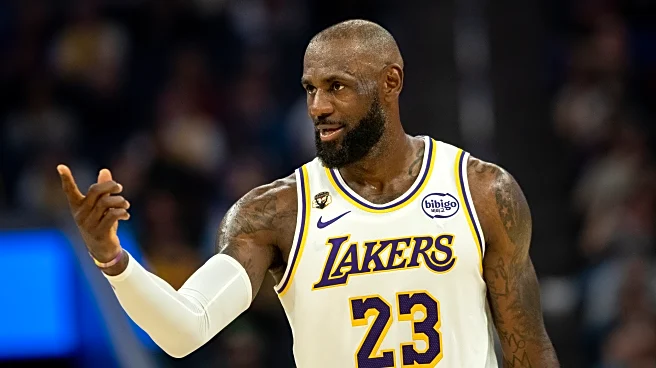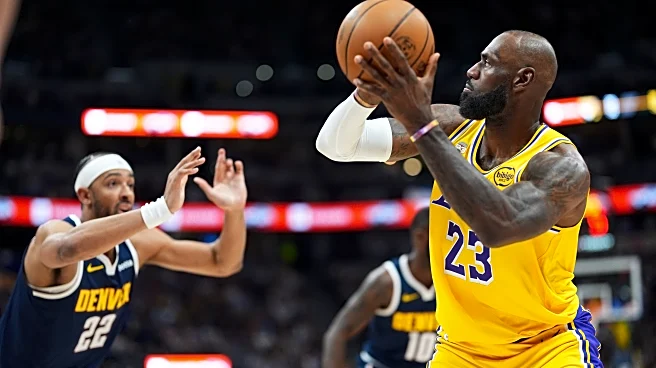

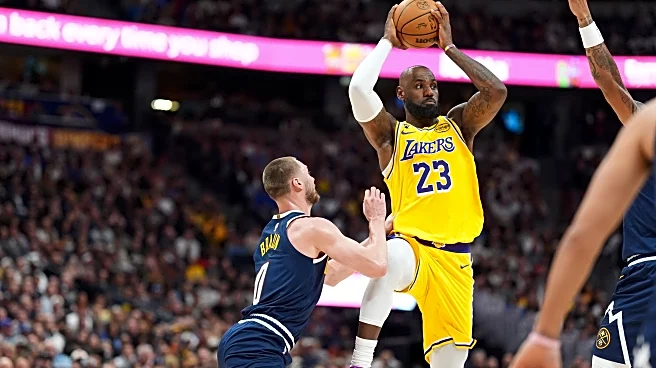


What's Happening?
Michael Jordan, a central figure in the NBA's greatest of all time (GOAT) debate, recently shared his perspective on the topic during an interview with NBC's Mike Tirico. Jordan expressed that the GOAT term is not something he is concerned with, as he never
had the opportunity to compete against legends like Oscar Robertson or Jerry West. He emphasized the importance of recognizing the contributions of past players who paved the way for current stars like LeBron James and Kobe Bryant. Jordan noted that while he would have loved to compete against these players in his prime, the debate often overlooks the achievements of earlier generations. He highlighted that the evolution of basketball, with advancements in technology, fitness, and analytics, makes it difficult to compare players across different eras.
Why It's Important?
The GOAT debate is a significant topic in sports culture, influencing fan discussions and media narratives. Jordan's comments underscore the complexity of comparing players from different eras, given the evolution of the game and the varying contexts in which players have competed. His perspective encourages a broader appreciation of basketball's history and the contributions of all players, rather than focusing solely on individual accolades. This approach can foster a more inclusive understanding of the sport's development and the interconnectedness of its past and present.
What's Next?
While the GOAT debate is likely to continue among fans and analysts, Jordan's remarks may prompt a shift towards recognizing the collective achievements of players across generations. This could lead to more nuanced discussions that appreciate the historical context of the game. Additionally, as current players continue to break records and set new standards, the debate will evolve, potentially incorporating new metrics and perspectives that reflect the changing nature of basketball.
Beyond the Headlines
Jordan's insights highlight the cultural and historical dimensions of sports debates, emphasizing the need to honor past contributions while celebrating current achievements. This perspective can influence how future generations of players and fans perceive the legacy of basketball legends, potentially leading to a more holistic appreciation of the sport's evolution.