




What's Happening?
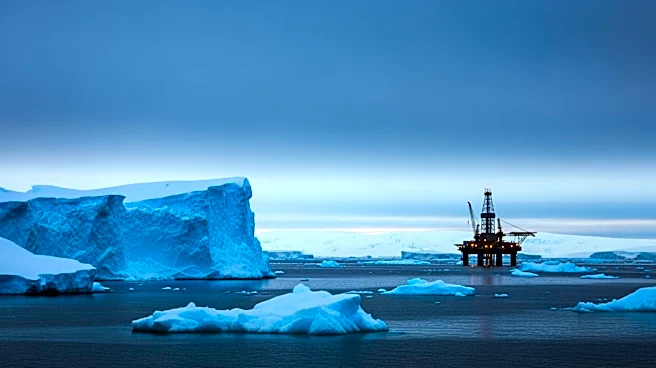
Greenland is emerging as a significant point of interest in the global oil and gas industry due to shifting geopolitical and supply dynamics. Historically considered a remote and challenging region for oil exploration, Greenland is now being revisited
as global supply becomes more fragmented and geopolitical risks reshape energy flows. The Jameson Land Basin in Greenland is estimated to hold over 13 billion barrels of prospective oil, making it one of the most significant undeveloped basins worldwide. The East Greenland Rift system is also recognized as a major hydrocarbon province. Improved Arctic accessibility and the geopolitical value of resources in stable, Western-aligned jurisdictions are drawing renewed attention and investment to Greenland. New exploration companies are forming, and drilling campaigns are being planned, although the region still faces challenges such as harsh operating conditions and a lack of infrastructure.
Why It's Important?
The renewed interest in Greenland's oil potential is significant for several reasons. As global energy security becomes increasingly tied to diversification and control over supply chains, Greenland offers a potential new frontier for oil exploration. This could reduce reliance on traditional oil-producing regions and enhance energy security for Western countries. However, the challenges of developing Greenland's oil resources are substantial, including environmental concerns, political sensitivity, and the need for extensive infrastructure development. The outcome of these efforts could have broad implications for global energy markets and geopolitical alignments, particularly as countries seek to secure stable and diversified energy sources.
What's Next?
The next steps for Greenland's oil exploration involve the execution of planned drilling campaigns and the development of necessary infrastructure. The success of these efforts will depend on overcoming logistical and environmental challenges, as well as navigating political and regulatory landscapes. If successful, Greenland could become a key player in the global oil market, although production timelines remain uncertain. Stakeholders, including governments and energy companies, will closely monitor developments in Greenland as they assess the viability of this new frontier.
Beyond the Headlines
Beyond the immediate implications for the oil industry, Greenland's potential development raises broader questions about the environmental impact of Arctic exploration and the ethical considerations of exploiting resources in such a sensitive region. The balance between economic development and environmental preservation will be a critical issue as Greenland's oil potential is explored. Additionally, the geopolitical implications of Greenland's development could influence international relations and energy policies, particularly among Western countries seeking to reduce dependence on traditional oil suppliers.