





What's Happening?
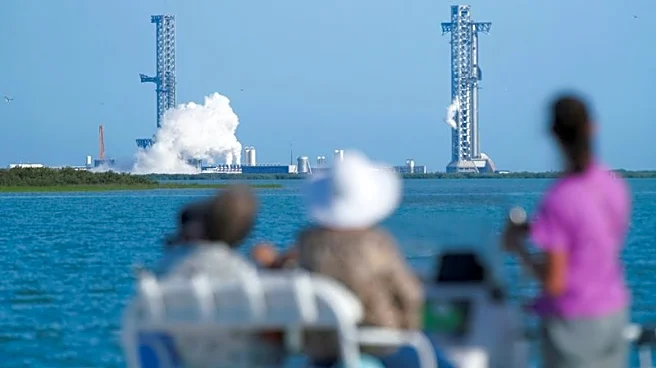
During SpaceX's twelfth Starship flight test on May 22, 2026, Starlink successfully streamed live video from the vehicle at hypersonic speeds. This marked the first time a Starship has been photographed from another object in orbit, using a modified Starlink satellite
equipped with a camera. The mission, which concluded with a splashdown in the Indian Ocean, demonstrated the capability of Starlink to maintain reliable communication and provide uninterrupted coverage of the event. The Starship V3 vehicle carried 20 Starlink simulators and two specially modified satellites designed to scan the heat shield and transmit real-time imagery back to operators.
Why It's Important?
This achievement underscores the potential of Starlink to support space missions by providing stable communication links even at hypersonic velocities. The ability to stream live video from space enhances transparency and public engagement with space exploration activities. It also demonstrates the technical capabilities of Starlink in overcoming challenges such as plasma buildup that can disrupt radio signals. The success of this mission is a significant step towards SpaceX's goal of deploying more powerful Starlink V3 satellites, which will greatly increase network capacity and improve global internet coverage.
What's Next?
SpaceX plans to continue testing and refining the Starship and Starlink systems, with full deployment of Starlink V3 satellites anticipated to begin in 2027. This will involve further launches to expand the satellite constellation and enhance global internet connectivity. The successful demonstration of hypersonic streaming may lead to new applications for Starlink in supporting other space missions and providing real-time data transmission capabilities. As SpaceX progresses towards its goal of return-to-launch-site capability for Starship, the data collected from these missions will be crucial in achieving that milestone.