








What's Happening?
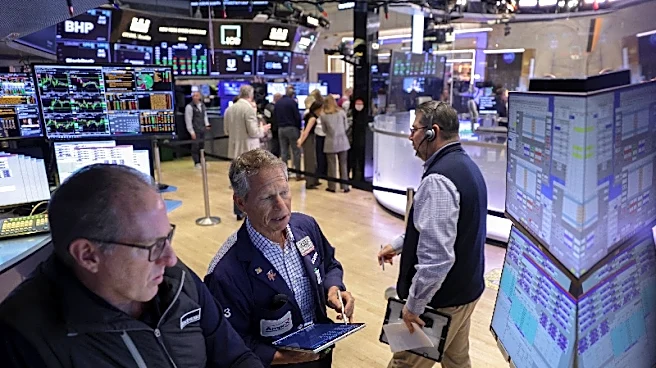
The U.S. stock market saw further declines on Tuesday, with the S&P 500, Dow Jones Industrial Average, and Nasdaq composite all experiencing losses. This downturn follows a record-setting rally, now pressured by rising bond yields and high inflation.
The yield on the 10-year Treasury note increased to 4.66%, reflecting a broader global trend that is making stock valuations appear more expensive and threatening economic growth. The ongoing conflict with Iran has contributed to this volatility, affecting oil prices and market stability. Despite a slight easing in oil prices, the cost of gasoline continues to rise, adding to consumer pressures. The market's reaction is also influenced by the anticipation of Nvidia's upcoming earnings report, which could impact the technology sector's performance.
Why It's Important?
The current market conditions highlight the challenges posed by inflation and geopolitical tensions on economic stability. Rising bond yields can lead to higher borrowing costs, affecting both consumer spending and corporate investments. The technology sector, which has been a significant growth driver, is particularly vulnerable to these pressures. The ongoing conflict with Iran adds another layer of uncertainty, impacting global oil supply and prices. As inflation continues to rise, there is increased pressure on the Federal Reserve to adjust its monetary policy, which could further influence market dynamics. These developments underscore the interconnectedness of global events and their impact on the U.S. economy.
What's Next?
Investors are awaiting Nvidia's earnings report, which could provide insights into the technology sector's resilience amid current market conditions. Additionally, the Federal Reserve's policy meeting minutes will be closely watched for indications of potential shifts in interest rates. As the market navigates these challenges, stakeholders will need to remain vigilant and adaptable to changing economic indicators and geopolitical developments.