







What's Happening?
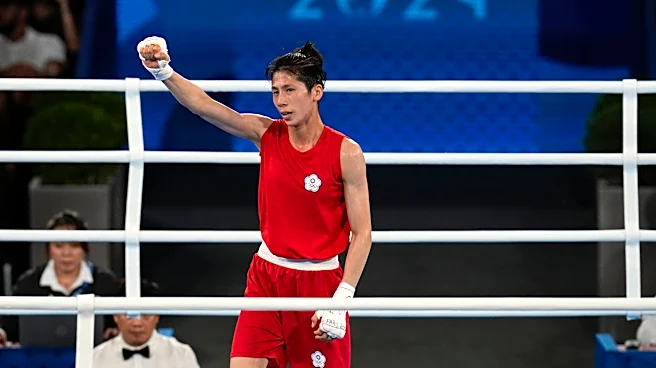
Olympic gold medalist Lin Yu-ting has advanced to the semifinals of the Asian boxing championships in Ulaanbaatar, Mongolia. This marks her first competition since World Boxing confirmed her gender through a genetic test. Lin, who is Taiwan's first Olympic boxing champion,
secured a decisive 5-0 victory over Ayaka Taguchi of Japan, the top-seeded competitor in the 60-kilogram lightweight division. This follows her earlier win against Thananya Somnuek of Thailand. Lin's participation comes after World Boxing, the sport's governing body, implemented a new sex eligibility policy requiring a one-time genetic test to identify the presence of a Y chromosome. Lin's eligibility was confirmed on March 19, allowing her to compete. The International Olympic Committee (IOC) has also introduced new rules banning transgender athletes and mandating a genetic test once in an athlete's career.
Why It's Important?
The situation surrounding Lin Yu-ting highlights ongoing debates about gender eligibility in sports, particularly in boxing. The introduction of genetic testing by World Boxing and the IOC's new rules reflect broader discussions on fairness and inclusion in competitive sports. These developments could significantly impact athletes who are subject to these tests, potentially affecting their careers and participation in international events. The controversy also underscores the challenges faced by sports organizations in balancing inclusivity with competitive integrity. Lin's case may set a precedent for how similar situations are handled in the future, influencing policies across various sports disciplines.
What's Next?
Lin Yu-ting is set to compete in the semifinals of the Asian boxing championships on Monday. The outcome of her matches and any further requirements for genetic testing could influence her eligibility for future competitions, including the Olympics. The broader implications of the new gender eligibility policies by World Boxing and the IOC may lead to further discussions and potential adjustments in the rules. Stakeholders, including athletes, sports organizations, and advocacy groups, are likely to continue debating the ethical and practical aspects of these policies.