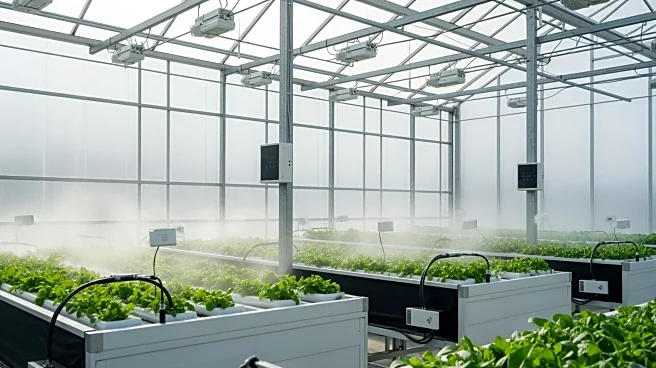

What's Happening?
The controlled environment agriculture market is experiencing rapid growth, driven by technological advancements and increased investments. The market is projected to reach a valuation of $200.07 billion
by 2030, with a compound annual growth rate of 14.1%. Key factors contributing to this expansion include the adoption of vertical farming, smart automation technologies, and sustainable food production methods. Companies like Siemens AG, Bowery Farming Inc., and Priva Holding BV are leading the industry, focusing on innovations that enhance crop yields and resource efficiency. A notable development in the sector was the acquisition of Freight Farms, Inc. by Agrinam Acquisition Corporation in September 2023, aimed at supporting Freight Farms' growth and transition into a publicly traded company.
Why It's Important?
The growth of the controlled environment agriculture market is significant for several reasons. It addresses the increasing demand for sustainable and efficient food production, crucial in the face of global food security challenges. The industry's expansion supports the development of climate-resilient agricultural practices, reducing reliance on traditional farming methods that are vulnerable to climate change. This shift not only benefits the environment but also offers economic opportunities by creating jobs and fostering innovation in agricultural technology. Companies investing in this sector are likely to gain a competitive edge, as the demand for pesticide-free and locally grown produce continues to rise.
What's Next?
As the controlled environment agriculture market continues to grow, further innovations and investments are expected. The University of Wyoming's launch of the Controlled Environment Agriculture Network in October 2025 highlights the increasing collaboration between academia, industry, and technology partners to advance research and workforce development in this field. This initiative aims to enhance climate-resilient food production methods and support the growth of sustainable farming systems. The market is likely to see more mergers and acquisitions, as companies seek to expand their capabilities and market reach. Additionally, the focus on year-round controlled crop cultivation and urban vertical farming operations is expected to intensify.
Beyond the Headlines
The rise of controlled environment agriculture has broader implications beyond immediate market growth. It represents a shift towards more sustainable and resilient food systems, which could have long-term benefits for global food security. The industry's focus on reducing environmental impact and improving resource efficiency aligns with broader societal goals of sustainability and climate change mitigation. As more consumers demand transparency and sustainability in their food sources, the controlled environment agriculture market is well-positioned to meet these expectations, potentially influencing consumer behavior and agricultural policies.