



What's Happening?
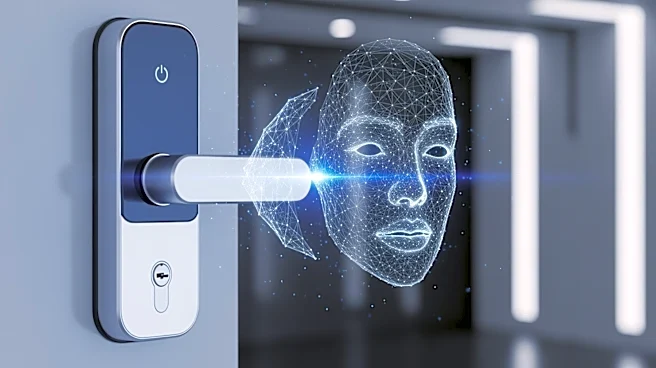
SwitchBot has launched its latest smart lock models, the Lock Vision and Lock Vision Pro, which incorporate advanced 3D structured-light facial recognition technology. This innovation allows for faster and more secure unlocking of doors by creating detailed
3D facial maps using 20,000 infrared points. The technology is designed to resist spoofing attempts using photos or videos and can recognize faces even when users are wearing glasses, hats, wigs, or makeup. The Lock Vision Pro also features multiple unlocking methods, including palm vein recognition, semiconductor fingerprint unlocking, and app control, among others. The device is equipped with a 10,000-mAh rechargeable battery, providing up to 12 months of usage on a single charge, and includes a CR123A backup battery for emergency unlocks. All biometric data is stored locally and encrypted with AES-128, ensuring user privacy and security.
Why It's Important?
The introduction of 3D structured-light facial recognition in smart locks represents a significant advancement in home security technology. This development enhances the security and convenience of smart home systems, potentially reducing the risk of unauthorized access. By storing biometric data locally and encrypting it, SwitchBot addresses privacy concerns associated with biometric technologies. The integration of multiple unlocking methods also offers users flexibility and reliability, catering to various preferences and scenarios. As smart home devices become more prevalent, innovations like these could drive broader adoption and set new standards for security and user experience in the industry.
What's Next?
As SwitchBot's new smart locks enter the market, consumer response and adoption rates will likely influence future developments in smart home security technologies. The success of these products could encourage other companies to explore similar technologies, potentially leading to increased competition and innovation in the sector. Additionally, the emphasis on privacy-preserving measures may prompt further discussions and regulations around the ethical use of biometric data in consumer products. Stakeholders, including tech companies, privacy advocates, and regulatory bodies, may engage in ongoing dialogue to ensure that advancements in smart home technology align with user privacy and security expectations.