





What's Happening?
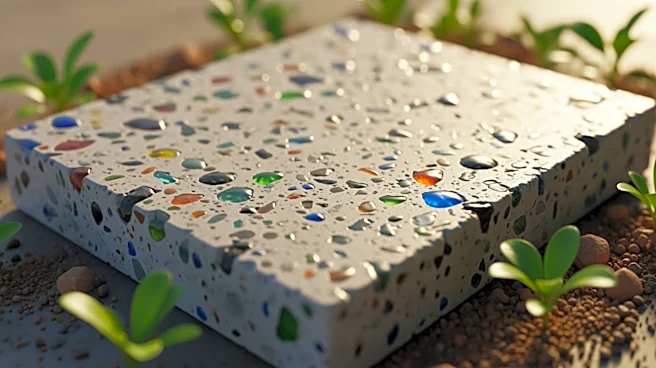
A new study has demonstrated that the use of nano-calcium carbonate (nano CaCO3) can significantly improve the performance of recycled aggregate concrete (RAC). This innovation addresses the challenges of using recycled materials in construction, such
as poor flowability and reduced mechanical strength. By refining pores and accelerating hydration, nano CaCO3 enhances both the flow and strength of RAC, making it a viable option for sustainable construction. The study highlights the potential of nano-engineering to transform recycled concrete into a high-performance material, supporting the circular use of construction waste and reducing environmental impact.
Why It's Important?
The construction industry is a major consumer of natural resources and a significant contributor to environmental degradation. By improving the performance of recycled concrete, this innovation can reduce the industry's reliance on virgin materials and decrease construction waste. The enhanced properties of nano CaCO3-based RAC make it suitable for structural applications, promoting sustainability without compromising on performance. This development aligns with global efforts to reduce carbon emissions and promote sustainable building practices, offering a practical solution to some of the industry's most pressing challenges.
What's Next?
Further research is needed to explore the long-term durability of nano CaCO3-based RAC under various environmental conditions. Large-scale applications will depend on the cost-effective production and dispersion of nano CaCO3. Future studies should also investigate the potential of combining nanomaterials with other modifiers to enhance durability. As the construction industry seeks to integrate sustainable practices, the development of industrial-scale implementation strategies will be crucial for the widespread adoption of this technology.