
What's Happening?
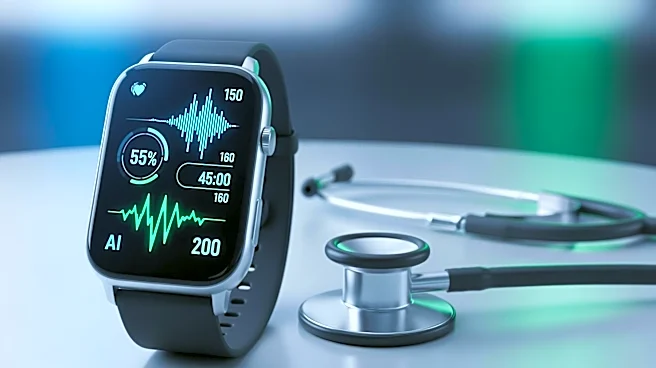
Tech companies, including Samsung Health and Alphabet's Google, are investing heavily in AI-powered wearables to predict and manage health risks. These devices, such as smartwatches and rings, aim to detect
conditions like dementia, heart attacks, and diabetes by analyzing data from indicators like speech, gait, blood pressure, and glucose levels. Samsung Health plans to introduce an AI 'personal health companion' to provide advice and alerts to Galaxy Watch users. Meanwhile, Google's Fitbit has launched a screenless band and integrated features to analyze medical records and glucose monitor readings. The goal is to provide early warnings about potential health issues, with companies like Whoop developing models to predict heart attacks well in advance.
Why It's Important?
The development of AI-powered health wearables represents a significant shift in healthcare, potentially allowing for earlier detection and prevention of serious health conditions. This could lead to reduced healthcare costs and improved patient outcomes by enabling proactive health management. However, the effectiveness of these predictions is still under scrutiny, and the technology raises concerns about data privacy and the potential for misuse of personal health information. The success of these initiatives could transform the healthcare industry, influencing how health data is collected, analyzed, and used to inform medical decisions.
What's Next?
As these technologies advance, regulatory bodies may need to adapt to ensure the safe and ethical use of health data. Companies are likely to continue lobbying for changes that would allow wearables to alert users to health issues without the lengthy approval process required for medical devices. The integration of these devices into healthcare systems could expand their accessibility, but it will also require addressing concerns about data security and the potential for healthcare spam. The industry will need to balance innovation with the protection of user privacy and the accuracy of health predictions.
Beyond the Headlines
The rise of predictive wearables could lead to a cultural shift in how individuals approach their health, potentially increasing reliance on technology for health monitoring. This could result in a more health-conscious society but also raises ethical questions about the extent of self-surveillance and the potential for anxiety related to constant health monitoring. Additionally, the demographic skew of current users towards younger, wealthier individuals may limit the applicability of predictive models to broader populations, highlighting the need for inclusive data collection practices.