





What's Happening?
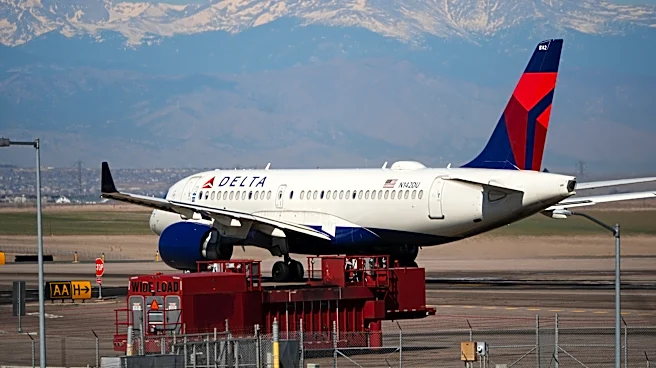
Delta Air Lines has announced a significant reduction in its capacity growth plans due to rising fuel costs, a consequence of the ongoing conflict in the Middle East. The airline's CEO, Ed Bastian, revealed that Delta will cut its capacity growth by approximately
3.5 percentage points. This decision is primarily aimed at mitigating the impact of elevated oil prices, which have doubled since earlier in the year. The capacity reductions will mainly affect lower-revenue flights, such as overnight red-eye flights and some midweek services. Delta's move is part of a broader trend among American carriers, which have collectively reduced planned domestic capacity growth by more than half a percentage point since March 13. The airline expects oil prices to remain high for the foreseeable future, significantly affecting its operating expenses.
Why It's Important?
The reduction in capacity growth by Delta Air Lines is a strategic response to the unprecedented spike in jet fuel prices, which have reached $4.81 a gallon, up from $2.50 before recent geopolitical tensions. This move is likely to lead to higher airfares as the airline seeks to offset increased fuel costs. Delta's decision highlights the broader challenges faced by the airline industry, where fuel costs are a major expense. The airline's ability to manage these costs will be crucial in maintaining profitability. Additionally, Delta's unique position of owning a refinery provides it with a competitive edge, allowing it to partially insulate itself from volatile oil markets. This strategy could influence other airlines to consider similar vertical integration approaches.
What's Next?
Delta Air Lines will continue to monitor the situation closely, with the potential for further adjustments to its capacity plans depending on the duration and impact of the fuel price spike. The airline aims to recover 40 to 50 percent of the higher fuel costs in the second quarter. As the situation evolves, Delta's management will assess the need for additional measures to protect its margins and cash flow. The airline's refinery is expected to play a crucial role in mitigating the impact of high fuel prices, providing a $300 million benefit in the second quarter. The industry will be watching closely to see how Delta and other airlines navigate these challenges and whether similar strategies will be adopted by competitors.