



What's Happening?
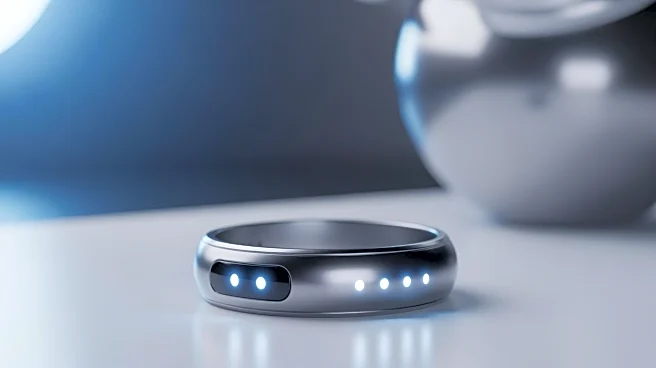
Ultrahuman has introduced its smart ring, the Ring Air, to the Israeli market. This device is designed to monitor health, sleep, and physical activity metrics, providing an alternative to smartwatches and fitness bands. The Ring Air is made from aerospace-grade titanium with a tungsten carbide coating, weighing just 2.4 grams, and is water-resistant up to 100 meters. It features a battery life of up to six days. The ring collects data on resting heart rate, heart rate variability, skin temperature, and blood oxygen levels. These metrics are analyzed through an app, which provides users with a Sleep Index, Movement Index, and Recovery Score. The product is available in Israel starting February 19, with prices set at NIS 1,399 for standard models
and NIS 1,579 for the Rose Gold model. A two-year service package is included, covering loss, theft, or damage.
Why It's Important?
The introduction of the Ultrahuman smart ring in Israel represents a significant development in the wearable technology market. By offering a device that does not require a monthly subscription, Ultrahuman is positioning itself as a cost-effective alternative to traditional fitness trackers and smartwatches. This could appeal to consumers looking for comprehensive health monitoring without ongoing costs. The ring's minimalist design and advanced features may attract tech-savvy users interested in tracking their health metrics more discreetly. Additionally, the inclusion of a service package enhances the product's value proposition, potentially increasing its competitiveness in the market.
What's Next?
As the Ultrahuman smart ring becomes available in Israel, consumer response will likely determine its success in the market. If the product gains traction, it could encourage other companies to explore similar subscription-free models, potentially reshaping the wearable technology landscape. The company's strategy and consumer feedback will be crucial in determining future expansions or product iterations. Additionally, the performance of the ring in terms of accuracy and user satisfaction will be key factors in its long-term adoption.