
What's Happening?
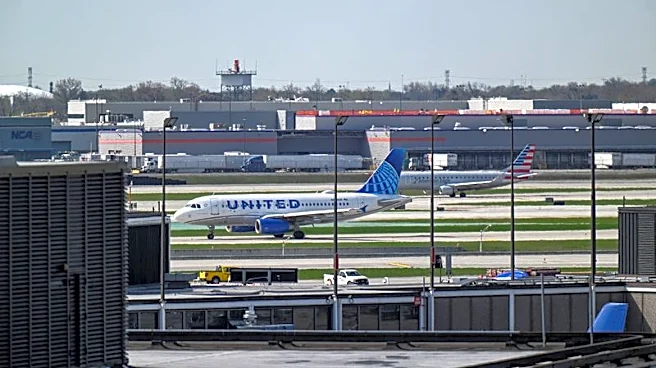
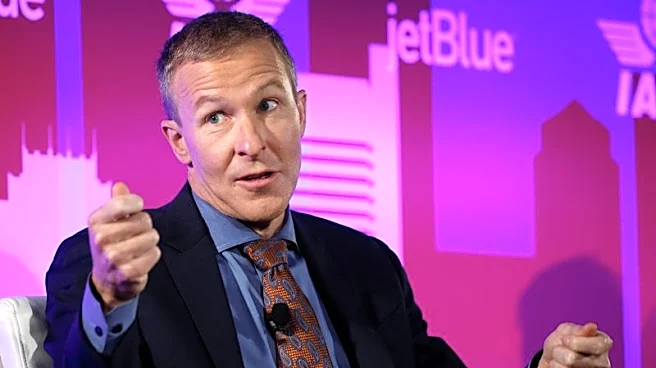
United Airlines CEO Scott Kirby proposed a merger with American Airlines during a meeting with President Trump at the White House. The potential merger, if realized, would create the largest airline in the world,
commanding over a third of the U.S. domestic market. This proposal has sparked significant interest and concern due to the already concentrated nature of the U.S. airline industry, where four major carriers dominate approximately 70% of the market. The merger would likely face intense regulatory scrutiny and opposition from various stakeholders, including unions, rival airlines, and lawmakers. Despite the challenges, the news of the proposal led to a surge in the stock prices of both United and American Airlines, indicating investor optimism.
Why It's Important?
The proposed merger between United and American Airlines is significant as it could reshape the U.S. airline industry by creating a dominant player with substantial market power. This consolidation could lead to reduced competition, potentially resulting in higher fares and fewer choices for consumers. The merger would also face antitrust challenges, as regulators are cautious about further reducing competition in an already concentrated market. The outcome of this proposal could set a precedent for future mergers in the industry, influencing regulatory approaches and competitive dynamics. Stakeholders such as consumers, employees, and smaller airlines could be significantly impacted by the merger's approval or rejection.
What's Next?
If the merger proposal advances, it will undergo rigorous scrutiny by antitrust regulators who will assess its impact on competition and consumer welfare. The Department of Justice and other regulatory bodies will likely require divestitures or other concessions to mitigate anti-competitive effects. Additionally, state attorneys general may also challenge the merger. The airlines will need to demonstrate that the merger would lead to efficiencies and benefits that outweigh potential harms. The process will involve negotiations with regulators and possibly legal challenges, which could delay or derail the merger. The outcome will be closely watched by industry stakeholders and could influence future consolidation efforts.