




What's Happening?
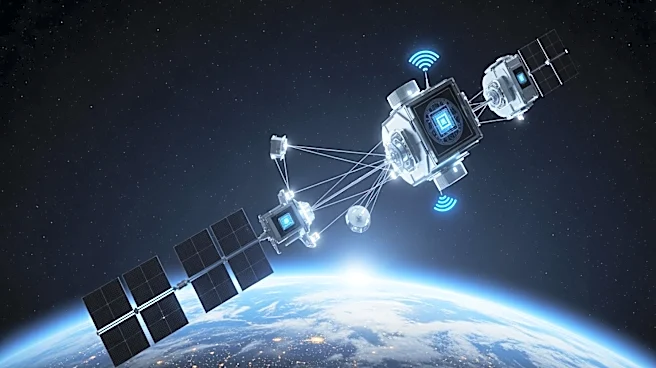
Swiss startup DPhi Space has successfully demonstrated its in-space compute capabilities with the Clustergate-2 mission. This mission, which launched on a Momentus Vigoride 7 satellite in March, involved hosting Liquid AI's large language model to analyze
Earth observation images directly in orbit. This marks a significant advancement in space-compute technology, allowing engineers to upload and test software in space without the need to build and deploy their own satellites. DPhi's mission aims to bridge the gap between software developers and satellite manufacturers by providing a platform for in-space software testing. The company has also organized a hackathon to explore new use cases for in-space computing, attracting around 500 applications.
Why It's Important?
The success of DPhi's Clustergate-2 mission represents a pivotal moment in the evolution of space technology, particularly in the realm of in-space computing. By enabling software testing directly in orbit, DPhi is reducing the barriers for developers and potentially accelerating the pace of innovation in space technology. This development could lead to more efficient and cost-effective satellite operations, benefiting industries reliant on satellite data, such as telecommunications, weather forecasting, and environmental monitoring. The ability to test and deploy software in space without launching new satellites could also lead to significant cost savings and increased flexibility for companies operating in the space sector.
What's Next?
Following the success of Clustergate-2, DPhi plans to integrate the lessons learned into a new production-class satellite called OmniSat, which is expected to launch by late 2027. OmniSat will be equipped to host various payloads and software capabilities, including NVIDIA GPUs, further expanding the potential for in-space computing. The ongoing hackathon organized by DPhi aims to generate new use cases and expand the customer base for its orbital computing platform. As the company continues to develop its technology, it is likely to attract more interest from industries looking to leverage in-space computing for various applications.