
What's Happening?
Industrialist Harsh Goenka shared a video showcasing a factory where garment workers use sensors to record their hand movements during sewing tasks. This data is used to train artificial intelligence systems
and robotic machines, offering a glimpse into the future of manufacturing. The video has sparked discussions about the potential impact of automation on factory jobs, with mixed reactions from viewers. While some see it as a step towards innovation and efficiency, others express concern over the implications for workers whose skills have traditionally powered the industry.
Why It's Important?
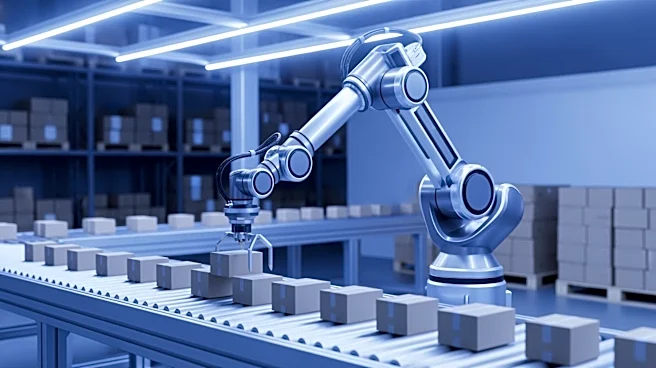
The video shared by Harsh Goenka underscores a significant shift in the manufacturing sector towards automation and AI integration. This development could lead to increased productivity and reduced errors in production processes. However, it also raises concerns about job security for workers in industries heavily reliant on manual labor, such as garment manufacturing. As AI systems become more capable of replicating human tasks, there is a risk of reduced demand for human labor, which could have socio-economic implications, particularly in countries where manufacturing jobs are a major source of employment.
What's Next?
The ongoing debate about automation in manufacturing is likely to continue as industries explore the balance between technological advancement and employment. Policymakers and industry leaders may need to address the potential displacement of workers and consider strategies for workforce retraining and adaptation. As AI-powered robotics become more prevalent, the manufacturing sector will need to navigate the challenges and opportunities presented by this technological evolution.