





What's Happening?
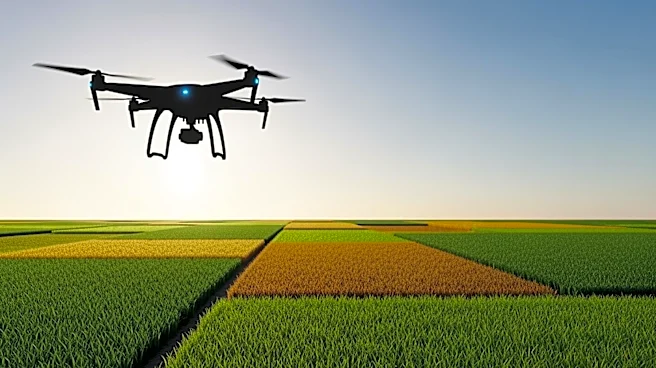
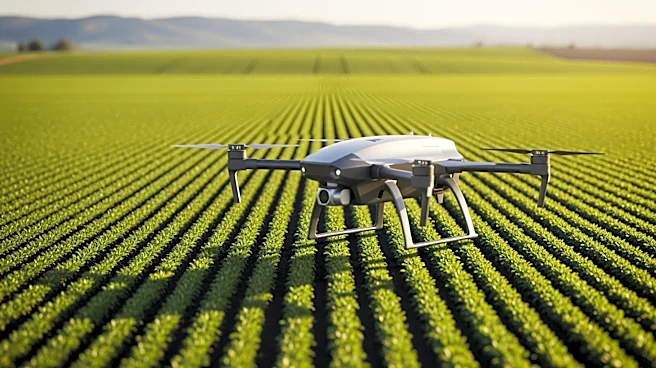
AI-powered drones are transforming precision farming by integrating autonomous flight with deep learning algorithms. These advanced aerial systems process multispectral imagery in real time, allowing farmers to shift from reactive troubleshooting to predictive
management. By pinpointing problem areas down to the exact square meter, these drones drastically reduce chemical input volumes and protect surrounding ecosystems. The Environmental Protection Agency highlights that drone-based sensing effectively identifies soil erosion, drainage anomalies, and nutrient deficiencies, enabling producers to address issues before they compromise large-scale crop development. This technology captures light wavelengths that reveal cellular activity inside leaves, offering insights into early plant stress long before visible symptoms appear.
Why It's Important?
The integration of AI-powered drones in agriculture represents a significant shift towards more sustainable and efficient farming practices. By reducing chemical usage and optimizing resource allocation, these drones help lower operational costs and increase yield quality. This technological advancement is crucial for managing the average American farm, which spans 446 acres, as it allows for strategic imagery collection during critical growth phases. The ability to detect early indicators of crop stress and apply precise treatments can significantly enhance profitability and sustainability in the agricultural sector. As the demand for food production increases, such innovations are vital for meeting global food security challenges while minimizing environmental impact.
What's Next?
As AI-powered drones become more prevalent in agriculture, farmers and agricultural businesses are likely to invest in this technology to enhance their operations. The adoption of these systems will require clear operational goals and investment in automated cloud processing software to ensure rapid data turnaround times. Additionally, operators will need to secure commercial remote pilot certification and specific state agricultural aircraft operator licenses to legally apply fertilizers, herbicides, or pesticides via autonomous aerial systems. The continued development and refinement of these technologies will likely lead to even more precise and efficient farming practices, further transforming the agricultural landscape.