


What's Happening?
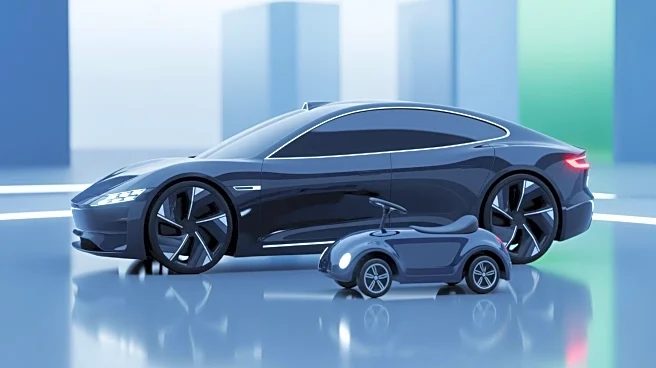
BMW and Mercedes have announced the release of new electric vehicles designed to cater to families, emphasizing spaciousness and efficiency. BMW's iX3, part of the Neue Klasse electric vehicle range, is reportedly outselling its gasoline counterpart in Germany, with a significant order backlog covering almost all of its 2026 production. The iX3 features a 109 kWh battery and dual motors, offering a range of approximately 400 miles. Production is set to begin in Hungary, with future plans for manufacturing in China and Mexico. Meanwhile, Mercedes has introduced the GLB, a spacious SUV with three-row seating options, built on the MMA platform with 800-volt architecture. The GLB is designed to offer comfort and efficiency, with a towing capacity
of 2 tons and a newly designed heat pump for improved energy efficiency.
Why It's Important?
The introduction of these family-friendly electric vehicles by BMW and Mercedes highlights a significant shift in the automotive industry towards accommodating the needs of larger households while maintaining environmental consciousness. This move is crucial as it addresses the growing demand for electric vehicles that do not compromise on space and practicality. The success of these models could further accelerate the transition from gasoline to electric vehicles, contributing to reduced emissions and supporting global sustainability goals. Additionally, the competitive pricing of these vehicles, in line with the rising average cost of new cars in the U.S., positions them as attractive options for consumers looking to switch to electric without sacrificing utility.
What's Next?
As production ramps up, BMW and Mercedes will likely focus on expanding their manufacturing capabilities to meet the high demand for these new models. The companies may also explore additional markets, particularly in North America, where political and tariff considerations could influence production decisions. The success of these vehicles could prompt other automakers to develop similar family-oriented electric models, further diversifying the electric vehicle market. Additionally, advancements in battery technology and charging infrastructure will be critical to supporting the widespread adoption of these vehicles.
Beyond the Headlines
The launch of these vehicles also reflects broader trends in consumer preferences and technological advancements. As electric vehicles become more mainstream, manufacturers are increasingly focusing on integrating advanced features such as fast charging and energy-efficient heating systems. These innovations not only enhance the driving experience but also contribute to the overall sustainability of electric vehicles. Furthermore, the emphasis on maintaining brand identity while incorporating electric technology suggests a strategic shift in how automakers market their electric offerings, potentially influencing consumer perceptions and brand loyalty.