


What's Happening?
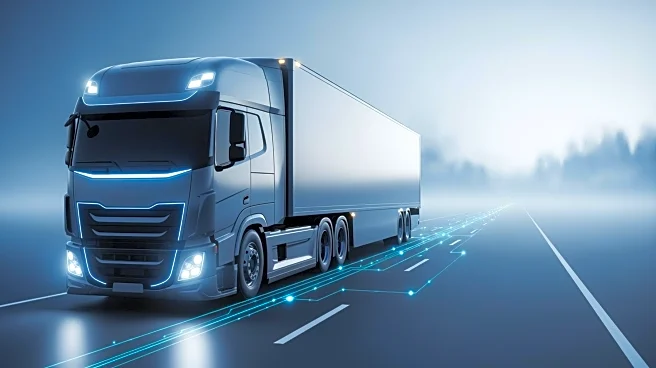
The integration of autonomous trucks into the logistics industry is facing significant challenges, particularly in terms of operational integration and safety. As companies like PlusAI and Kodiak AI work to incorporate self-driving technology into their
fleets, they encounter hurdles related to maintenance and usability. Autonomous trucks require more complex maintenance due to their advanced technology components, necessitating extensive pre- and post-trip inspections. Additionally, the integration of these vehicles into existing dispatch systems and maintenance workflows presents logistical challenges. Safety remains a critical concern, as public acceptance of autonomous trucks hinges on their ability to demonstrate safety benefits over human-driven vehicles. Despite potential safety advantages, incidents involving autonomous trucks could severely impact public perception and regulatory acceptance.
Why It's Important?
The development and integration of autonomous trucks have significant implications for the U.S. logistics and transportation sectors. While these vehicles promise to alleviate driver shortages and improve efficiency, the complexity of their technology demands a skilled workforce for maintenance, which is currently in short supply. The safety of autonomous trucks is paramount, as any accidents could lead to public backlash and regulatory hurdles, potentially stalling industry progress. The successful integration of autonomous trucks could revolutionize freight transportation, reducing costs and increasing efficiency. However, the industry must address these challenges to realize these benefits fully.
What's Next?
As the industry continues to develop autonomous trucking technology, companies will need to focus on building infrastructure to support these vehicles. This includes creating centralized hubs for operations such as fueling, inspections, and loading, which may be co-located with existing truck stops. Additionally, ongoing efforts to prove the safety of autonomous trucks will be crucial for gaining regulatory approval and public acceptance. Companies will need to invest in training programs to equip technicians with the skills necessary to maintain these advanced vehicles. The industry will also need to engage with policymakers to establish regulations that support the safe deployment of autonomous trucks.
Beyond the Headlines
The shift towards autonomous trucking could have broader implications for the labor market, particularly for truck drivers and technicians. While autonomous trucks may reduce the demand for drivers, they could create new opportunities in vehicle maintenance and technology management. The transition to autonomous vehicles also raises ethical and legal questions about liability in the event of accidents. As the technology becomes more prevalent, society will need to address these issues to ensure a smooth transition to autonomous freight transportation.