







What's Happening?
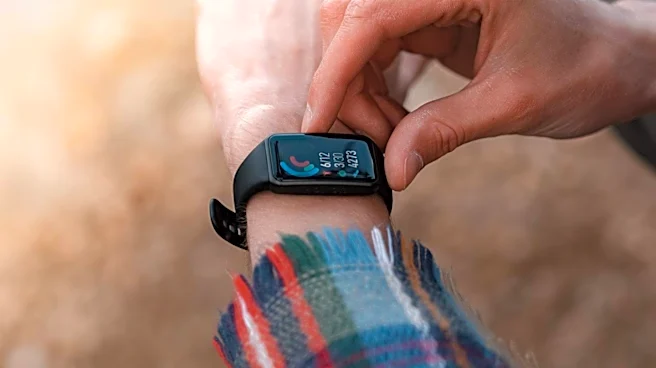
The article discusses the importance of placement for fitness trackers to ensure accurate health data collection. It highlights that while most wearables are designed for the wrist, alternative placements like the bicep, sports bra, or even underwear
can offer different levels of accuracy. The Whoop band, for instance, can be worn in various locations, challenging the traditional wrist placement. The article explains how optical sensors, such as photoplethysmography (PPG), work by measuring blood flow under the skin, and how placement affects the accuracy of readings. It also notes that while wrist-based devices are convenient, they may not always provide the most accurate data compared to other placements like the chest or upper arm.
Why It's Important?
The placement of fitness trackers is crucial for obtaining accurate health metrics, which can influence personal health management and fitness routines. Accurate data is essential for users who rely on these devices for monitoring heart rate, sleep patterns, and other vital signs. The article emphasizes that while wrist-based devices are popular due to convenience, they may not always offer the precision needed for serious health monitoring. This has implications for consumers who use these devices to track health conditions or improve fitness, as inaccurate data could lead to misinformed health decisions. The discussion also touches on the limitations of current technology, such as the impact of skin tone on sensor accuracy, highlighting the need for continued innovation in wearable technology.
What's Next?
As wearable technology continues to evolve, manufacturers may explore new designs and placements to enhance accuracy. This could lead to the development of more versatile devices that can be worn in multiple locations, offering users greater flexibility and precision. Additionally, advancements in sensor technology and algorithms could improve the accuracy of wrist-based devices, making them more reliable for health monitoring. Consumers may also become more informed about the importance of device placement, leading to more personalized and effective use of fitness trackers.
Beyond the Headlines
The article raises important considerations about data privacy, as the health data collected by wearables is not protected by HIPAA. This means that users' biometric data could be shared with third parties, raising ethical concerns about data security and privacy. As wearables become more integrated into daily life, there may be increased scrutiny and regulation regarding how this data is used and protected. This could lead to changes in industry practices and consumer expectations regarding data privacy and security.