



What's Happening?
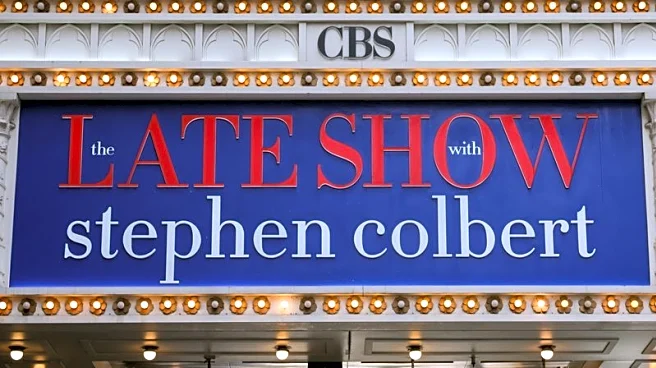
Stephen Colbert, host of CBS's 'The Late Show,' has publicly criticized his network for its handling of an interview with Democratic U.S. Senate candidate James Talarico. Colbert claims CBS instructed him not to air the interview due to the Federal Communications Commission's (FCC) equal-time rule, which mandates broadcasters offer equal airtime to political candidates. CBS, however, stated that Colbert was not prohibited from airing the interview but was advised to offer equal time to Talarico's opponents. Colbert defied CBS's instructions by discussing the issue on air and posting the interview on YouTube, which is not subject to FCC regulations.
Why It's Important?
This dispute highlights ongoing tensions between media companies and regulatory bodies over the
equal-time rule, which could impact how political content is broadcasted. The rule's enforcement could limit the ability of talk shows to feature political candidates, potentially affecting public discourse and media freedom. Colbert's actions underscore the challenges media personalities face when navigating corporate and regulatory pressures. The situation also reflects broader concerns about media influence in politics and the role of regulatory bodies in shaping media content.
What's Next?
The controversy may prompt further discussions about the FCC's equal-time rule and its applicability to modern media platforms. CBS's response to Colbert's defiance could set a precedent for how networks handle similar situations in the future. The outcome may influence other media companies' policies regarding political content and candidate interviews. Additionally, the FCC's stance on the rule could evolve, potentially affecting the media landscape and political campaigning strategies.