






What's Happening?
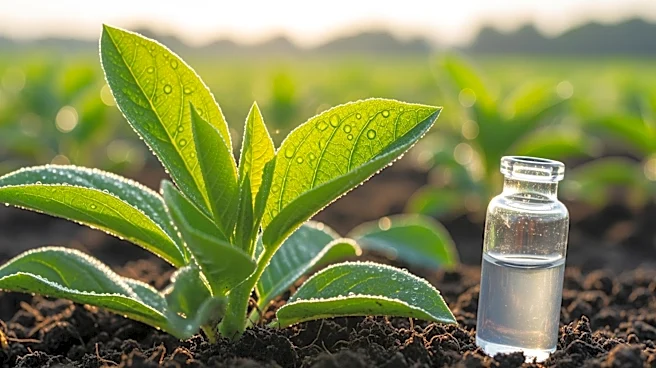
Biologicals and biostimulants are gaining traction in agriculture as tools to enhance nutrient management and sustainability. These naturally-derived products, such as compost and plant extracts, have been used for centuries to improve soil quality and plant health.
Today, they are being integrated into fertility programs to address challenges like extreme weather, water shortages, and soil degradation. The focus is on improving Nutrient Use Efficiency (NUE), which can lead to better crop yields and economic returns. Despite initial skepticism, growers are increasingly adopting these technologies to optimize nutrient uptake and protect fertilizer investments.
Why It's Important?
The adoption of biologicals and biostimulants represents a shift towards more sustainable agricultural practices. By improving NUE, these technologies can help reduce the environmental impact of farming, such as nutrient runoff and soil degradation. This shift is crucial as farmers face rising production costs and tighter margins. The ability to maximize nutrient efficiency not only supports environmental goals but also enhances the economic viability of farming operations. As these products prove their effectiveness, they could become integral to modern agriculture, influencing policy and industry standards.
Beyond the Headlines
The integration of biologicals into agriculture also has broader implications for environmental conservation. By enhancing nutrient cycling and reducing reliance on synthetic fertilizers, these technologies can contribute to healthier ecosystems and biodiversity. Additionally, as climate change continues to impact agricultural productivity, the role of biologicals in building resilient farming systems becomes increasingly important. This development may also drive innovation in agricultural research, leading to new discoveries and applications of biological technologies.