




What's Happening?
California's battery-electric vehicle (BEV) market share has dropped to its lowest level in four years, following the elimination of federal EV purchase subsidies. In Q1 2026, BEV sales in the state fell by 40.2% year-on-year, reducing the zero-emission
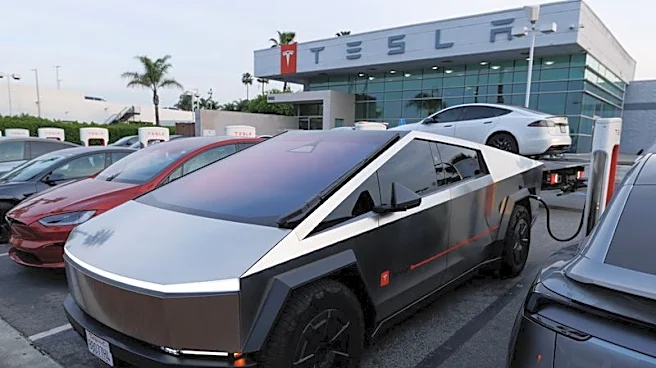
market share to 13.7%. The removal of the $7,500 federal tax credit on September 30, 2025, is cited as a primary factor for the decline. Despite the overall market contraction, Tesla maintained its dominance in the BEV segment, although its sales also decreased. Hybrid and internal combustion engine vehicle sales increased, indicating a shift in consumer preferences.
Why It's Important?
The decline in California's BEV market share highlights the significant impact of federal incentives on electric vehicle adoption. The reduction in financial support has led to a sharp decrease in BEV sales, challenging the state's efforts to transition to zero-emission vehicles. This development could have broader implications for U.S. environmental policy and the automotive industry's shift towards electrification. The situation underscores the importance of government incentives in driving consumer behavior and supporting the growth of sustainable transportation solutions.
What's Next?
California faces the challenge of regaining momentum in its push towards zero-emission vehicles. Governor Gavin Newsom's planned $200 million incentive program for electrified vehicles may play a crucial role in offsetting the loss of federal subsidies. The state will need to explore additional strategies to encourage BEV adoption and meet its 2035 mandate for all new passenger vehicle sales to be zero-emission. The outcome of these efforts will be closely monitored by policymakers and industry stakeholders as they navigate the evolving landscape of the automotive market.