



What's Happening?
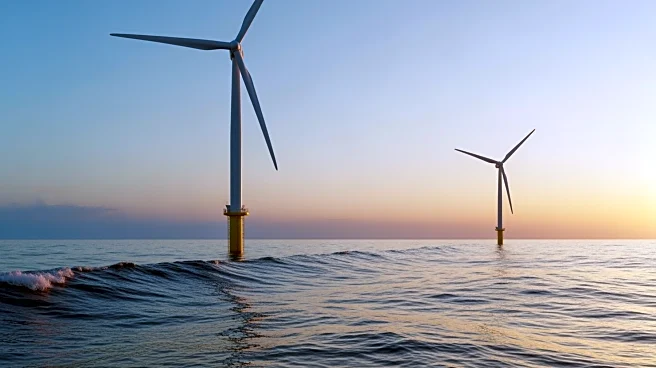
Massachusetts has entered into a memorandum of understanding with Nova Scotia to import renewable energy from the Canadian province. This agreement aims to address Massachusetts' growing power needs while supporting Nova Scotia's efforts to launch its first offshore wind projects. The collaboration is seen as a strategic move to expand renewable energy sources, especially in light of opposition from the Trump administration to offshore wind energy development. Massachusetts has been a leader in the U.S. offshore wind industry, with projects like Vineyard Wind 1 nearing completion. The state has actively opposed federal efforts to curtail offshore wind development, including legal actions against the Trump administration's policies. Nova Scotia,
with its strong and consistent winds, plans to develop significant offshore wind capacity, potentially becoming a major power supplier to both Canada and the U.S.
Why It's Important?
This agreement is significant as it represents a cross-border collaboration to enhance renewable energy infrastructure, which could set a precedent for similar partnerships. For Massachusetts, it provides a solution to meet increasing energy demands while aligning with environmental goals. For Nova Scotia, it offers a market for its nascent offshore wind industry, encouraging investment and development. The deal also highlights the ongoing tension between state-level renewable energy initiatives and federal policies under the Trump administration, which sought to limit offshore wind development. The partnership could influence future energy policies and encourage other states to pursue similar agreements to diversify their energy sources and reduce reliance on fossil fuels.
What's Next?
The next steps involve Nova Scotia advancing its offshore wind projects, with a call for bids expected soon. Massachusetts will likely continue to support and develop its offshore wind infrastructure, potentially leading to more agreements with other regions. The success of this partnership could prompt other states to explore international collaborations for renewable energy. Additionally, the legal and political landscape may evolve as states push back against federal policies that hinder renewable energy development. Stakeholders, including energy companies and environmental groups, will be closely monitoring the progress and outcomes of this agreement.