




What's Happening?
Blue Origin, the space company founded by Jeff Bezos, is set to make a significant advancement in reusable rocket technology with the upcoming launch of its New Glenn rocket. Scheduled for April 19, 2026, this mission, known as NG-3, will mark the first
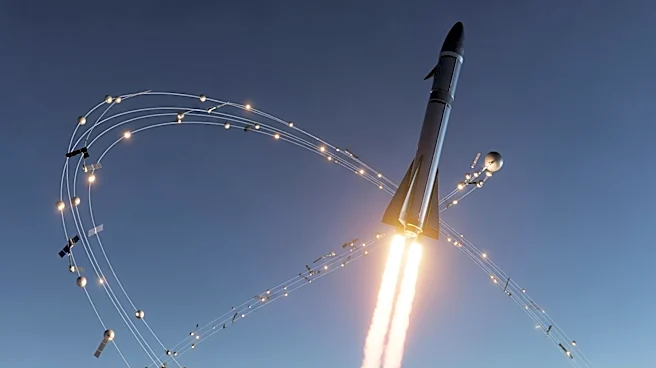
time Blue Origin reuses a rocket stage. The New Glenn rocket will carry the BlueBird 7 satellite, part of AST SpaceMobile's internet constellation, to low Earth orbit. The launch will take place from Cape Canaveral Space Force Station in Florida. The first stage of the rocket, which was previously used in the NG-2 mission, has been refurbished with new engines and is expected to land on Blue Origin's droneship, 'Jacklyn', in the Atlantic Ocean. This mission is a crucial step for Blue Origin as it aims to compete with SpaceX's reusable rockets.
Why It's Important?
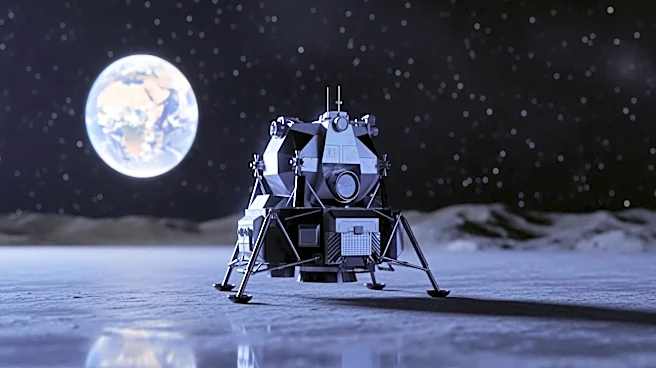
The successful reuse of the New Glenn rocket stage represents a major milestone for Blue Origin in the competitive space industry. Reusability is a key factor in reducing the cost of space travel, making it more accessible and sustainable. By achieving this, Blue Origin positions itself as a formidable competitor to SpaceX, which has already demonstrated the viability of reusable rockets. This development could lead to increased competition in the commercial space sector, potentially driving innovation and lowering costs. Additionally, the success of this mission could bolster Blue Origin's role in NASA's Artemis program, where it is developing the Blue Moon lander for future lunar missions.
What's Next?
Following the NG-3 mission, Blue Origin plans to continue refining its reusable rocket technology. The company aims to reuse each New Glenn first stage at least 25 times, which would significantly enhance its operational efficiency and cost-effectiveness. The success of this mission could also influence NASA's decision-making regarding lunar landers for the Artemis program, as both Blue Origin and SpaceX are in contention. Future missions will likely focus on further testing and demonstrating the capabilities of the New Glenn rocket, as well as the Blue Moon lander, to meet NASA's requirements for crewed lunar missions.