






What's Happening?
Ryanair has announced plans to bring its engine maintenance operations in-house to mitigate the rising costs associated with power-by-the-hour (PBH) deals. The airline's CFO, Neil Sorahan, highlighted the financial benefits of this move during a recent
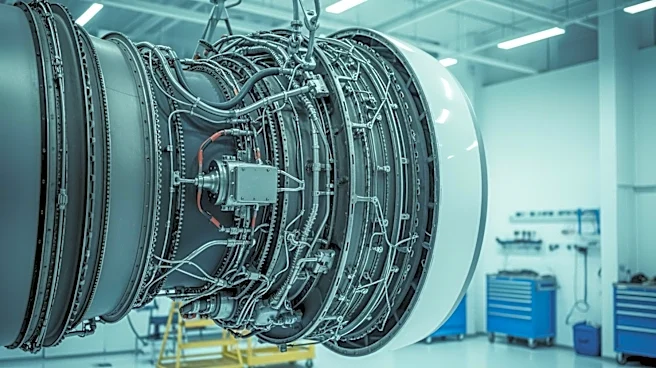
earnings call. Ryanair has had a longstanding PBH agreement with CFM, but the introduction of new-generation CFM Leap-1B engines has increased costs significantly. Sorahan noted that renegotiating the current deal would result in costs four to five times higher than before. By establishing its own engine maintenance facilities, Ryanair expects to pay only double the previous rates. This strategic shift is anticipated to enhance Ryanair's competitive edge by allowing faster engine processing and reducing the need for spare engines. The airline is considering six potential locations for its new facilities, with a decision expected by early summer. Ryanair plans to invest $800 million across two sites.
Why It's Important?
This development is significant for the airline industry as it highlights the financial pressures airlines face due to rising maintenance costs. Ryanair's decision to internalize engine maintenance could set a precedent for other airlines seeking cost-effective solutions. By reducing reliance on external PBH deals, Ryanair aims to achieve greater operational efficiency and cost savings. This move could also lead to increased competition among airlines, as Ryanair's enhanced capacity and reduced costs may allow it to offer more competitive pricing. Additionally, the investment in new facilities could stimulate economic activity in the chosen locations, potentially creating jobs and boosting local economies.
What's Next?
Ryanair is expected to finalize the locations for its engine maintenance facilities by early summer. The airline's investment of $800 million will be distributed across two sites, with construction and operational plans likely to follow soon after. As Ryanair implements its in-house maintenance strategy, other airlines may monitor the outcomes closely, potentially leading to similar strategic shifts in the industry. The decision could also prompt discussions among industry stakeholders about the sustainability and cost-effectiveness of traditional PBH agreements.