


What's Happening?
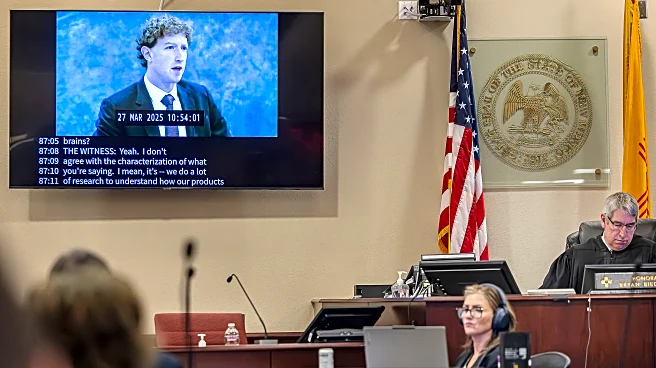
A New Mexico jury has ruled that Meta, the parent company of Facebook, Instagram, and WhatsApp, violated state consumer protection laws by misleading users about the safety of its platforms and allowing child sexual exploitation. The lawsuit, initiated
by New Mexico's Attorney General Raúl Torrez, resulted in a $375 million penalty against Meta, marking the maximum penalty per violation under state law. The ruling highlights allegations that Meta's executives were aware of the potential harm to children but chose to ignore warnings from employees. Meta has announced plans to appeal the decision, maintaining that it works diligently to ensure user safety and remove harmful content. The case is part of a broader scrutiny of social media companies regarding their responsibility for user safety, particularly concerning minors.
Why It's Important?
This ruling is significant as it underscores the growing legal and public pressure on social media companies to prioritize user safety, especially for children. The substantial penalty reflects the seriousness with which courts are beginning to treat allegations of negligence by tech giants. For Meta, this decision could lead to increased regulatory scrutiny and potentially inspire similar lawsuits in other states. The case also raises questions about the effectiveness of current safety measures on social media platforms and whether more stringent regulations are necessary to protect vulnerable users. The outcome may influence public policy and legislative actions aimed at holding tech companies accountable for the content and interactions on their platforms.
What's Next?
Meta plans to appeal the ruling, which could lead to a prolonged legal battle. Meanwhile, the New Mexico Attorney General's office intends to seek additional penalties and push for changes in Meta's platform operations to enhance child safety. This case may set a precedent for other states considering similar legal actions against social media companies. Additionally, a related trial in Los Angeles involving Meta and Google-owned YouTube is ongoing, with potential implications for how tech companies address addiction and safety concerns. The outcomes of these cases could drive legislative changes and influence how social media platforms operate in the future.