









What's Happening?
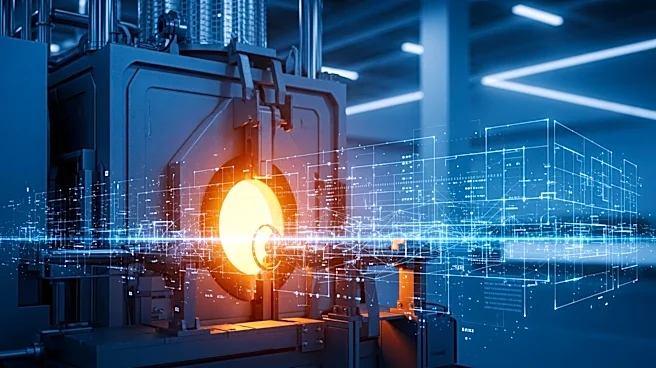
Applied Materials has announced the completion of its new manufacturing campus in Tampines, Singapore, aimed at addressing the increasing demand for artificial intelligence semiconductors. The company invested $500 million in the facility, which includes
large-scale cleanrooms, manufacturing, and research and development facilities. This expansion is part of the company's Singapore 2030 initiative, which seeks to enhance global manufacturing capacity and foster collaboration within the technology ecosystem. The new campus has already begun operations and is expected to create approximately 1,000 new jobs in Singapore over the coming years.
Why It's Important?
The expansion of Applied Materials' operations in Singapore is significant as it strengthens the company's ability to supply semiconductor manufacturing equipment, crucial for the production of next-generation chips. This move is in response to the growing demand for advanced semiconductors driven by the proliferation of AI technologies across various industries. By increasing its manufacturing capacity, Applied Materials is positioning itself to better support chipmakers in accelerating the launch of new technologies. This development also highlights the strategic importance of Singapore as a hub for semiconductor manufacturing and innovation.
What's Next?
Applied Materials plans to continue its global expansion efforts, with its EPIC Center in Silicon Valley set to begin operations later this year. This $5 billion research and development facility aims to reduce the time from research to mass production for semiconductor-related companies. The company’s ongoing investments in manufacturing and R&D facilities worldwide indicate a commitment to maintaining a competitive edge in the rapidly evolving semiconductor industry. Stakeholders, including chipmakers and technology firms, are likely to benefit from the increased availability of advanced manufacturing equipment and technologies.
Beyond the Headlines
The new Singapore campus incorporates several environmentally friendly features, such as solar panel systems, low-carbon concrete, and a closed-loop wastewater recovery system. These initiatives align with global sustainability trends and demonstrate Applied Materials' commitment to reducing its environmental impact. The integration of autonomous mobile robots and AI-based quality inspection technologies at the facility also reflects the growing trend of automation and digitalization in manufacturing processes, which could lead to increased efficiency and reduced operational costs.