


What's Happening?
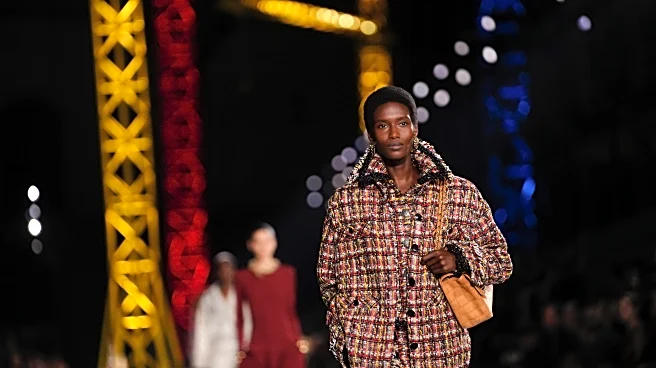
The Fall 2026 Paris Fashion Week marked a significant shift in the fashion industry, moving away from minimalism towards more expressive and personality-driven designs. Designers showcased collections that emphasized visual memorability, theatrical styling,
and emotionally resonant color stories. This change reflects a broader cultural fatigue with algorithm-friendly aesthetics that prioritize uniformity over individuality. The collections featured bold prints, distinctive accessories, and sculptural silhouettes, aiming to reclaim fashion's role as a visual language of identity and cultural storytelling. The shift is driven by a renewed appetite for visual personality, as designers reintroduce color, graphics, and accessories to restore excitement to fashion.
Why It's Important?
This shift in fashion is significant as it represents a broader cultural movement towards authenticity and individuality. The emphasis on expressive fashion aligns with societal values that prioritize creativity and personal freedom. As digital platforms reward visually striking imagery, designers who focus on personality and creativity are likely to gain stronger cultural visibility. This transformation creates new opportunities across various sectors, including luxury fashion, retail, and accessories. Brands that can balance creativity with wearability will benefit most from this shift, as expressive dressing is expected to influence both luxury collections and broader retail markets.
What's Next?
As the fashion industry embraces expressive individuality, brands are likely to introduce more statement accessories, color-led capsule collections, and graphic collaborations. These strategies will help brands maintain cultural relevance and media visibility. The trend towards expressive fashion is expected to continue, with designers prioritizing visual storytelling as a competitive advantage. This shift will likely influence consumer behavior, as individuals seek garments that communicate personality and creativity. Brands that successfully merge creativity with commercial accessibility will build stronger cultural authority and resilience against commoditization.