



What's Happening?
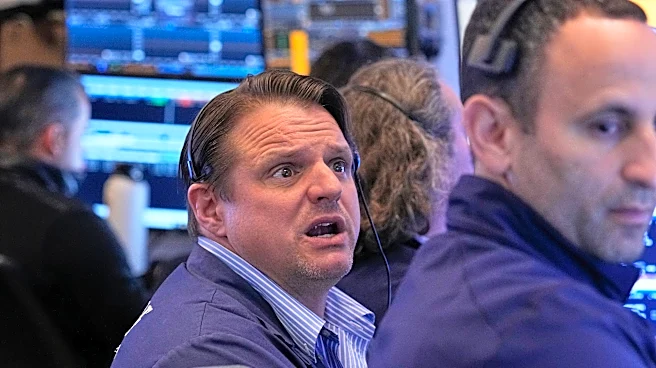
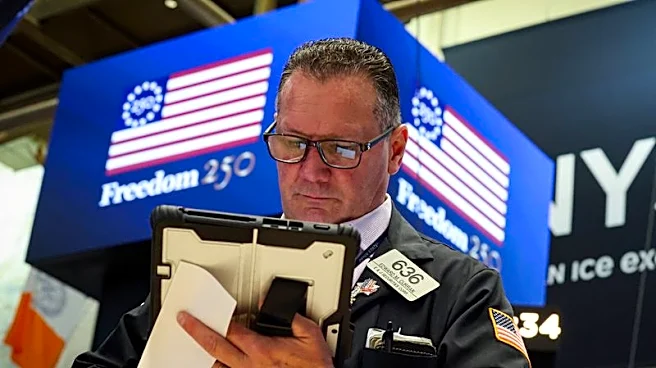
The US stock market experienced a decline on Monday following a weekend of escalating tensions between the US and Iran. The Nasdaq Composite led the losses, dropping nearly 0.3%, while the S&P 500 fell by 0.2% and the Dow Jones Industrial Average edged
down by 0.1%. The tensions were exacerbated by the US Navy's seizure of an Iranian ship, which led to Iran halting traffic in the Strait of Hormuz, a critical passageway for global oil shipments. This geopolitical unrest has caused oil prices to rise, with West Texas Intermediate crude futures increasing by 5.2% and Brent crude by 5.1%. Investors are now facing increased uncertainty as they await earnings reports from major companies like Tesla, Intel, and United Airlines, which are expected to provide further insights into market trends.
Why It's Important?
The renewed tensions between the US and Iran have significant implications for global markets, particularly in the energy sector. The Strait of Hormuz is a vital chokepoint for oil transportation, and any disruption can lead to increased oil prices, affecting global supply chains and economic stability. The stock market's reaction reflects investor concerns about geopolitical risks and their potential impact on economic growth. Additionally, the upcoming earnings reports from major corporations will be closely watched as indicators of how businesses are navigating these uncertainties. The situation underscores the interconnectedness of geopolitical events and financial markets, highlighting the need for investors to remain vigilant in assessing risks.
What's Next?
Investors will be closely monitoring developments in the US-Iran situation, as any further escalation could lead to more significant market volatility. The upcoming earnings reports from key companies will also be pivotal in shaping market sentiment. Analysts and investors will be looking for signs of resilience or vulnerability in corporate performance amid geopolitical tensions. Additionally, any diplomatic efforts to de-escalate the situation could provide relief to markets, but the path forward remains uncertain. Stakeholders, including policymakers and business leaders, will need to navigate these challenges carefully to mitigate potential economic disruptions.