





What's Happening?
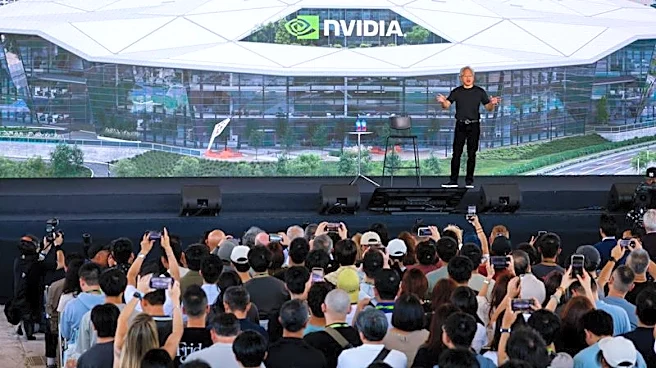
Groq, a startup known for its high-speed AI inference hardware, is raising $650 million from existing investors to pivot towards cloud-based inference services. This move follows a significant $20 billion licensing deal with Nvidia, which included the
transfer of Groq's chip technology and key leadership figures to Nvidia. The new funding round is structured to allow current shareholders to reinvest, with investors Disruptive and Infinitum ensuring the full amount is raised. Groq, now under interim CEO Adam Winter and CFO Matt Eng, is focusing on expanding its GroqCloud platform, which offers inference-as-a-service using its proprietary Language Processing Unit (LPU) hardware. This shift marks a strategic transformation from a semiconductor company to a cloud service provider.
Why It's Important?
The transition of Groq from a semiconductor company to a cloud-based service provider highlights a significant shift in the AI industry, emphasizing the growing importance of inference services. This move could potentially reshape the competitive landscape, as GroqCloud aims to specialize in inference workloads, offering an alternative to general-purpose GPU clouds. The $650 million investment underscores investor confidence in Groq's new direction and the potential of the AI inference market. However, the competitive environment is intensifying, with companies like DeepSeek reducing prices, which could impact revenue models. Additionally, Nvidia's access to Groq's technology may accelerate its own advancements in inference hardware, posing further challenges for Groq.
What's Next?
Groq plans to use the $650 million to expand GroqCloud's capacity and develop next-generation LPU technology. The company is betting on the long-term potential of the AI inference market, which involves processing user prompts in AI models. As GroqCloud positions itself as a specialized infrastructure provider, it will need to navigate a competitive market with players like Nvidia and DeepSeek. The unique structure of the funding round, which recycles capital from existing investors, may set a precedent for future transactions in the AI private markets. Regulatory scrutiny may also continue, given the nature of the Nvidia deal and its implications for antitrust considerations.